Invisalign Articles
iTero Scanner in Barcelona: What It Is and How It Works
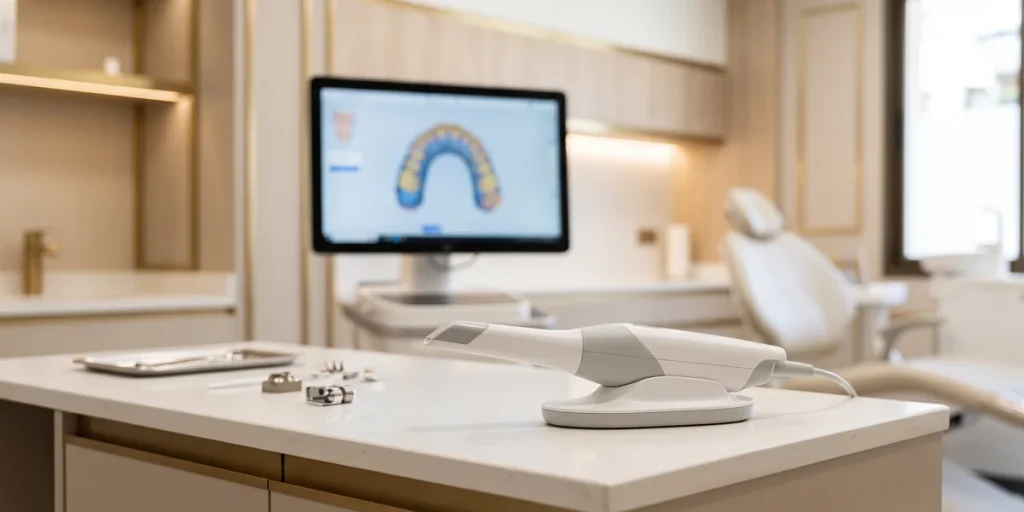
iTero scanner in Barcelona: how intraoral scanning works, what it detects, differences between models and why it has replaced silicone molds.
Orthodontics and digital smile design
Orthodontics and digital smile design
Orthodontics and dental aesthetics

You notice that your upper teeth cover your lower teeth too much and you're not sure if it's normal. Perhaps someone has told you that you have overbite And you wonder what it implies and how it can be solved.
In this comprehensive guide, we explain exactly what an overbite is, how to detect it, what the consequences are if left untreated, and what the most effective treatments are for correcting it. If you are looking for specialists in Invisible orthodontics in Barcelona, We can help you regain a correct bite and a harmonious smile.
Front page » blog » How to Correct an Overbite: Treatments and Solutions
The overbite It is a type of dental malocclusion in which the upper teeth excessively cover the lower teeth when the mouth is closed.
In a normal bite, the upper teeth should cover approximately one-third of the lower teeth. When this overlap is greater, it is called an overbite.
In severe cases, the upper teeth can become completely cover the lower ones, and even the lower incisors can touch the palate or upper gum when biting.
It is also known as deep bite and it is one of the most frequent malocclusions in the population.
There are two main types of overbite depending on the direction of the problem:
Overbite (deep bite): The upper teeth excessively overlap the lower teeth vertically. This is the most common type. The upper incisors cover more than a third of the lower incisors.
Horizontal overbite (protrusion): The upper teeth are positioned significantly forward compared to the lower teeth. There is an excessive horizontal distance between the two dental arches.
Furthermore, depending on its origin, an overbite can be:
Dental: The problem lies in the position of the teeth, not in the bones.
Skeletal: The problem lies in the size or position of the upper and/or lower jaw. It usually requires more complex treatments.
An overbite can be caused by different factors:
Genetics: It's the most common cause. If your parents have an overbite, you're more likely to develop one too. The size and shape of the jaws are inherited.
Children's habits: Thumb sucking, using a pacifier for too long, or pushing the tongue against the teeth can cause alterations in bite development.
Tooth loss: When a tooth is lost and not replaced, adjacent teeth can shift and alter the bite.
Bruxism: Grinding your teeth regularly can wear them down and change your bite over time.
Mouth breathing: Breathing through the mouth instead of the nose during childhood can affect the development of the jaws.

These are the signs that may indicate you have an overbite:
When you smile: Your lower teeth are barely visible or not visible at all when you smile.
When biting: You feel like your upper teeth cover too much of your lower teeth. In severe cases, your lower incisors may touch your palate.
Tooth wear: The teeth show abnormal wear, especially on the edges of the incisors.
Jaw pain: Discomfort in the jaw joint (TMJ), especially when chewing or waking up.
Frequent headaches: Tension in the jaw can cause headaches.
Difficulty biting certain foods: Problems biting with the front teeth.
If you identify several of these symptoms, we recommend that you see an orthodontist for a professional evaluation.
If left uncorrected, an overbite can cause various long-term problems:
Premature tooth wear: The teeth rub together incorrectly, causing accelerated enamel wear.
Temporomandibular joint (TMJ) problems: Pain, clicking, or locking in the jaw.
Bruxism: Malocclusion promotes teeth grinding, especially at night.
Periodontal disease: Overloading some teeth can damage the gums and the bone that supports them.
Difficulty chewing: An incorrect bite makes it difficult to properly chew food.
Aesthetic problems: A severe overbite can affect facial harmony and confidence when smiling.
Speech problems: In some cases it can affect the pronunciation of certain sounds.
An overbite can be corrected at any age, although the treatment varies depending on the stage of life:
Children (6-11 years): This is the ideal age for intervention. Interceptive orthodontics can guide the growth of the jawbones while they are still developing. Treatments are shorter and simpler.
Adolescents (12-18 years): The bones have finished growing, but the teeth are easily moved. Braces or clear aligners are used to correct their position.
Adults: It is also possible to correct an overbite in adulthood with orthodontics. In severe cases of skeletal origin, orthognathic surgery may be necessary.
The earlier it is detected and treated, the simpler and faster the treatment will be. That's why a first visit to the orthodontist is recommended at age 6.
The treatment to correct an overbite depends on its cause, severity, and the patient's age:
Interceptive orthodontics (children): Appliances that guide the growth of the jawbones during childhood. They can prevent major problems later in life.
Braces: Traditional fixed braces are very effective for correcting an overbite. They can be metal, sapphire, or lingual (fitted on the inside of the teeth).
Invisible orthodontics (Invisalign): Removable clear aligners that discreetly correct the position of your teeth.
Orthognathic surgery: In severe cases of skeletal overbite in adults, surgical intervention may be necessary to reposition the jawbones.
The orthodontist will determine the most appropriate treatment after a complete assessment of the case.
The invisible orthodontics It is one of the most popular options for correcting overbite in teenagers and adults.
How does it work? A series of custom-made, transparent aligners are used that gradually move the teeth into the correct position.
Advantages:
– Virtually invisible: no one will notice you're wearing braces.
– Removable: they are taken out for eating and brushing your teeth.
– Comfortable: they do not cause chafing or sores.
– Fewer visits to the clinic than with conventional braces.
Is it effective for overbite? Yes, invisible orthodontics can correct most cases of overbite of dental origin. Only in very severe cases or those of skeletal origin might another type of treatment be necessary.
The orthognathic surgery It is reserved for cases of severe overbite of skeletal origin that cannot be corrected with orthodontics alone.
When is it necessary?
– When the problem lies in the size or position of the jawbones, not just the teeth.
– In adults with severe overbite who would not respond adequately to orthodontics.
– When the overbite causes significant functional problems (breathing, chewing, speech).
What does it consist of? The maxillofacial surgeon repositions the jawbones to achieve proper occlusion. This is combined with orthodontics before and after the procedure.
Results: In addition to correcting the bite, it improves facial harmony, chewing function, and, in many cases, breathing. The results are permanent.
The duration of treatment to correct an overbite varies depending on several factors:
Interceptive orthodontics (children): Between 6 and 12 months of active treatment, plus a retention period.
Orthodontics with braces or aligners: Between 12 and 24 months in most cases. Mild overbites can be corrected in less time.
Orthodontics + orthognathic surgery: Between 24 and 36 months in total, including orthodontics before and after surgery.
Factors that influence duration:
– Severity of the overbite.
– Patient's age.
– Patient cooperation (especially with removable aligners).
– Presence of other associated problems (crowding, crossbite, etc.).
Correcting an overbite It doesn't hurt, However, it is normal to experience some discomfort during treatment:
First days with braces: It's common to feel pressure or sensitivity in your teeth after getting braces or starting a new set of aligners. This discomfort usually disappears within 2-3 days.
During treatment: Minor discomfort may occur after periodic adjustments, but it is tolerable and temporary.
With braces: During the first few weeks, minor chafing may occur on the lips or cheeks until the mouth adapts.
Orthognathic surgery: The post-operative period requires a few days of rest and pain medication, but it is perfectly manageable.
In general, the discomfort is mild and temporary. The end result is worth it.
If retainers are not used correctly after treatment, there is a risk of relapse. Therefore, it is essential to follow the orthodontist's instructions and wear the retainers for the prescribed period (usually indefinitely at night).
In most cases of overbite of dental origin, yes. Invisalign is very effective in correcting this type of malocclusion. Only in very severe cases or those of skeletal origin might it be necessary to complement it with other treatments.
Yes, genetics is the most common cause of an overbite. The size and shape of the jaws are inherited from parents to children. If one of your parents has an overbite, you are more likely to develop one as well.
In severe cases, an overbite can affect the pronunciation of some sounds, especially those that require the tongue to contact the front teeth. Correcting the bite usually resolves these problems.
If left untreated, an overbite can lead to premature tooth wear, temporomandibular joint (TMJ) problems, bruxism, periodontal disease, and difficulty chewing. The sooner it is treated, the easier the treatment will be.
He price of correcting an overbite It depends on the treatment required:
Interceptive orthodontics (children): €1,000 – €2,500
Metal braces: €2,500 – €4,000
Aesthetic brackets (sapphire/ceramic): €3,500 – €5,000
Invisible orthodontics (Invisalign): €3,000 – €5,500
Orthognathic surgery + orthodontics: €15,000 – €25,000
Factors that influence the price:
– Complexity and duration of treatment.
– Type of equipment chosen.
– Professional experience.
– Location of the clinic.
Most clinics offer payment plans and financing options. It's best to request a personalized consultation to get an exact quote.
How useful did you find this content?
Click on a star to rate it!
Average score 0 / 5. Vote count: 0
So far, there are no votes! Be the first to rate this content.
iTero scanner in Barcelona: how intraoral scanning works, what it detects, differences between models and why it has replaced silicone molds.
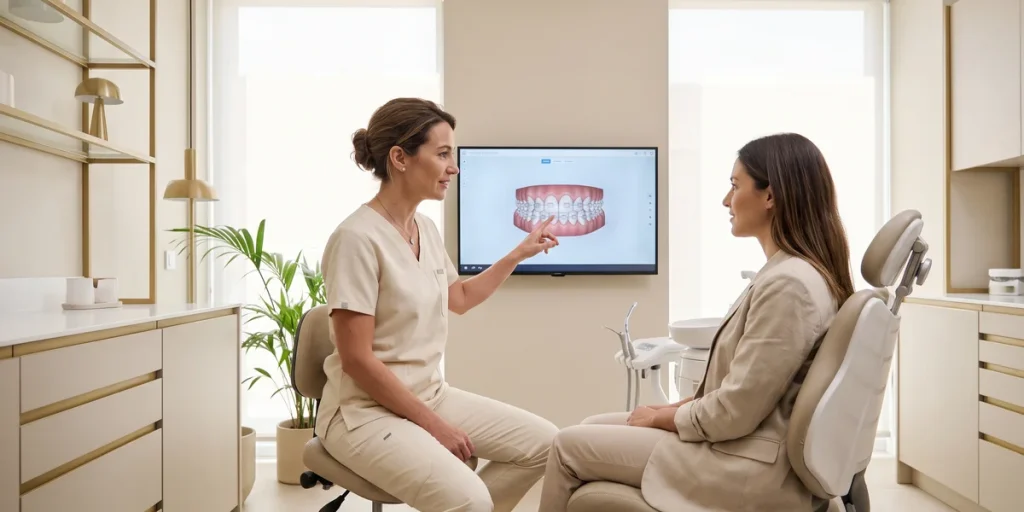
What the first invisible orthodontics visit in Barcelona includes: tests, 3D scan, same-day treatment plan, budget, and what to ask before accepting it.

Invisalign Comprehensive in Barcelona: what complex cases it corrects, when it's not enough, how long it lasts, what unlimited aligners mean, and what the price should include.
THE CLINIC IS CLOSED IN AUGUST.
You can schedule your first visit online now and secure your spot for a free full diagnosis in September.