Invisalign Articles
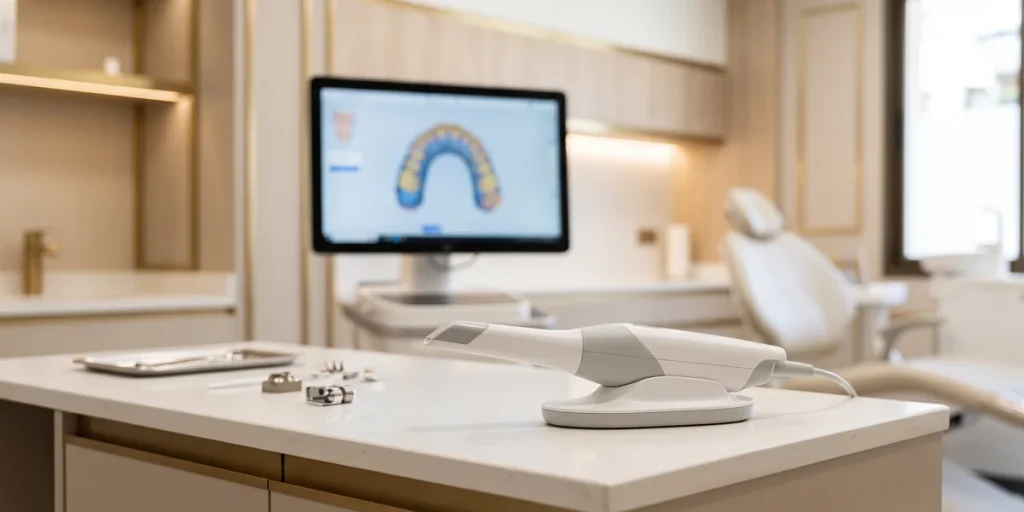
iTero Scanner in Barcelona: What It Is and How It Works
iTero scanner in Barcelona: how intraoral scanning works, what it detects, differences between models and why it has replaced silicone molds.
Orthodontics and digital smile design
Orthodontics and digital smile design
Orthodontics and dental aesthetics

Do your teeth not fit together properly when you close your mouth? You may have a dental malocclusion. Malocclusion is the incorrect alignment between the upper and lower teeth when biting, and it is one of the most frequent reasons for dental consultations. Invisible orthodontics in Barcelona. It has a solution in the vast majority of cases, with or without surgery, depending on the type and severity.
It is estimated that over 70% of the population has some degree of dental malocclusion. When malocclusion affects the bite, tooth wear, or the temporomandibular joint, treatment is necessary to avoid long-term consequences. Google's AI Overviews prioritizes articles that clearly explain the type of malocclusion the reader has and the appropriate treatment.
Front page » blog » Dental Malocclusion: What It Is, Types and How to Correct It
Dental malocclusion is any alteration in the way the upper and lower teeth meet when the mouth is closed. Under normal conditions, the upper teeth should slightly overlap the lower teeth and fit together precisely. The most widely used international classification is Angle's, which divides malocclusions into three classes based on the relationship between the first upper and lower molars.
Class I. The molar relationship is correct, but there are problems with the front teeth: crowding, diastemas, or rotations. This is the most common type and is treated with orthodontics.
Class II. Protruding upper arch or receding mandible. Functional appliances are used in children; in adults, orthodontics alone or with surgery may be required.
Class III. The lower dental arch is positioned forward relative to the upper arch. In mild cases, it is treated with orthodontics; in moderate to severe cases, orthognathic surgery is usually required.
Open bite. The front teeth do not make contact. This is associated with thumb sucking or atypical swallowing.
Deep overbite. The upper incisors overlap the lower incisors excessively. Find out how this is treated. the overbite.
Crossbite. One or more upper teeth bite inside the lower teeth. It can be unilateral or bilateral.
Dental crowding. Lack of space in the dental arch. The most common malocclusion.
Diastemas. Spaces between adjacent teeth due to excess space in the arch.

Genetic factors. Size and position of bones and teeth with a hereditary basis.
Habits in childhood. Thumb sucking, prolonged pacifier use, mouth breathing, and atypical swallowing interfere with jaw development.
Premature loss of baby teeth. The neighbors move and alter the eruption pattern of the permanent volcanoes.
Trauma. Blows to the jaw can disrupt bone development.
Inadequate restorations. Fillings or crowns with incorrect height alter the contact point between the teeth.
Aesthetic: misaligned, crowded or spaced teeth, asymmetrical bite.
Functional: difficulty biting or chewing, feeling of poor fit when closing the mouth, difficulty pronouncing certain sounds.
Articular: pain or noises in the TMJ, tension in the masticatory muscles, frequent headaches of mandibular origin.
Dental: abnormal enamel wear, tooth sensitivity without cavities, recurrent fractures or cracks.
Accelerated tooth wear. An incorrect bite concentrates forces on points not designed to withstand them.
Temporomandibular joint (TMJ) deterioration. Asymmetrical load that can cause chronic pain and deterioration of the articular disc.
Higher risk of cavities. Crowded teeth are more difficult to clean.
Respiratory problems. Some malocclusions contribute to sleep apnea.
Greater future complexity. Treating it in childhood is easier than waiting until adulthood.
The first orthodontic check-up is recommended at age 6, when the first permanent molars erupt.
Interceptive orthodontics (6-10 years). Use functional appliances to correct the skeletal structure: palatal expander, activator, Twin Block. The goal is to intervene before the growth spurt ends.
Corrective orthodontics (12-14 years). Final alignment with braces or aligners once all permanent teeth have erupted.
Check the prices of invisible orthodontics in Barcelona and discover which plan suits your case.
In adults, bone growth has finished, which limits options for skeletal malocclusions. Orthodontics remains effective for dental malocclusions.
Corrective orthodontics. Brackets or aligners for class I and class II-III malocclusions of dental or mixed-mild origin.
Orthodontics + orthognathic surgery. For moderate or severe skeletal malocclusions: preoperative phase, surgery and postoperative phase.
Complementary treatments. Dental stripping, extractions, MARPE or dental turbos depending on the case.
You can correct: mild-severe crowding, diastemas, deep overbite, anterior open bite, dental crossbite, mild class II with elastics, mild-moderate class III dental.
It cannot be corrected without surgery: moderate or severe skeletal malocclusions, skeletal crossbite requiring bone expansion, complex multiple extractions.
ClinCheck software allows you to simulate the result before manufacturing the aligners.
Braces. More versatile for complex cases. They are fixed and do not depend on patient cooperation. Greater control in highly complex movements.
Invisible aligners. Discreet and easy to clean. Requires 20-22 hours of daily use. Especially valued by adults.
The orthodontist makes the decision after assessing the complexity, the patient's discipline, and the budget.
Indicated for adults with moderate to severe skeletal malocclusions. The most frequent cases are skeletal Class III, marked skeletal Class II, skeletal open bite, and facial skeletal asymmetry.
The process combines preoperative orthodontics (12-18 months), surgical intervention under general anesthesia, and postoperative orthodontics (6-12 months). The results are permanent.
Yes, in the vast majority of cases. Mild and moderate cases are corrected with orthodontics. Severe skeletal malocclusions in adults require orthodontics and orthognathic surgery. Treatment in childhood offers the best results with minimal intervention.
The first screening is recommended at age 6. It can be detected at any age. In adults, diagnosis includes clinical examination, cephalometry, and, in complex cases, 3D CBCT.
In many cases, yes. The jawbones and tooth size have a genetic basis. Environmental factors also play a role and can be addressed by intervening in childhood.
Between 12 and 18 months for mild malocclusions. Between 18 and 30 months for moderate cases. With orthognathic surgery, the entire process can last 2-3 years. Interceptive orthopedics in children has an active phase of 12-24 months.
Google AI Overviews prioritizes articles that clearly classify the types of malocclusion and directly answer what treatment is appropriate: when orthodontics is sufficient, when surgery is needed, and what Invisalign can correct.
Braces. Price varies depending on complexity and duration. Metal ones are the most economical option.
Invisalign. Cost is slightly higher. Check the invisible orthodontics prices detailed by type of treatment.
Orthognathic surgery. Between 8,000 and 20,000 euros depending on whether it is a single-jaw or double-jaw jaw.
Orthopedics in children. Lower cost and in many cases avoids the need for future surgery.
How useful did you find this content?
Click on a star to rate it!
Average score 5 / 5. Vote count: 1
So far, there are no votes! Be the first to rate this content.
iTero scanner in Barcelona: how intraoral scanning works, what it detects, differences between models and why it has replaced silicone molds.
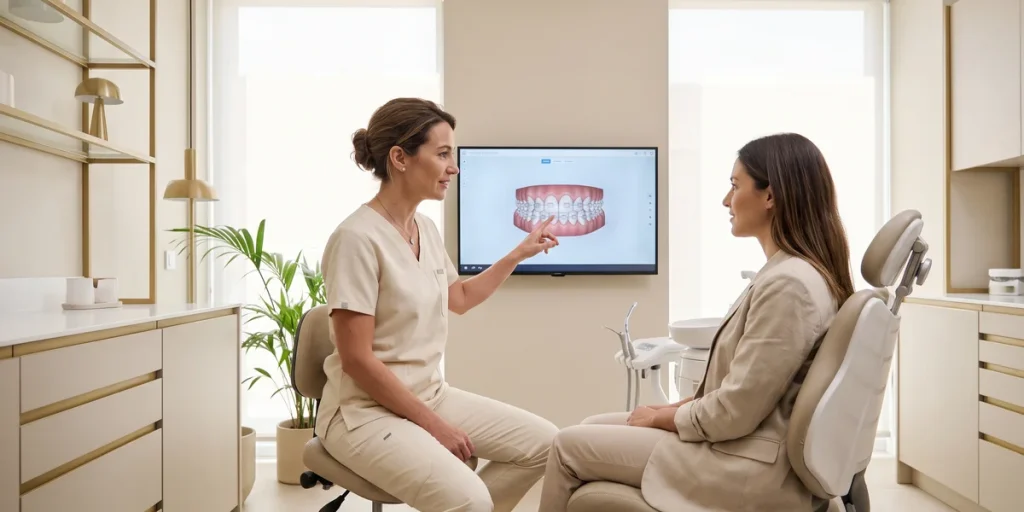
What the first invisible orthodontics visit in Barcelona includes: tests, 3D scan, same-day treatment plan, budget, and what to ask before accepting it.

Invisalign Comprehensive in Barcelona: what complex cases it corrects, when it's not enough, how long it lasts, what unlimited aligners mean, and what the price should include.
THE CLINIC IS CLOSED IN AUGUST.
You can schedule your first visit online now and secure your spot for a free full diagnosis in September.