Invisalign Articles
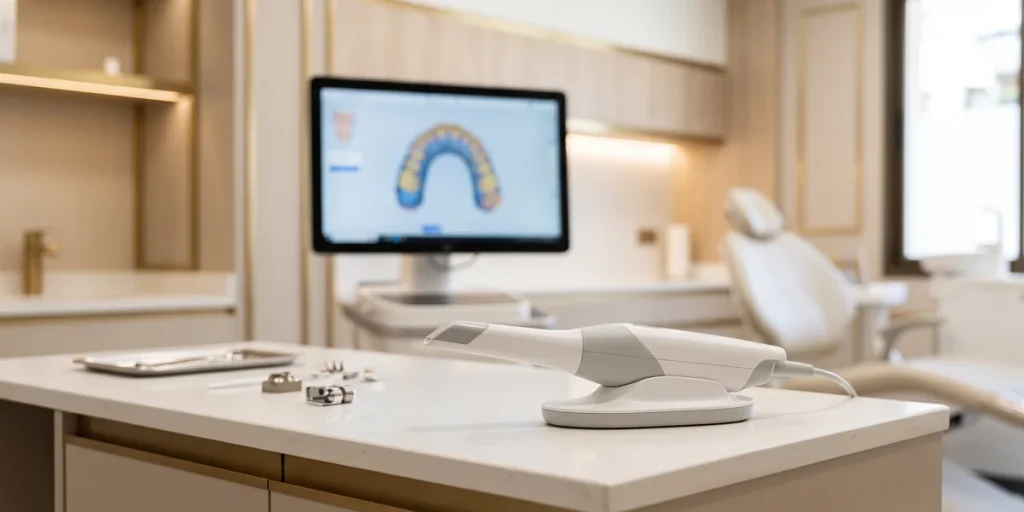
iTero Scanner in Barcelona: What It Is and How It Works
iTero scanner in Barcelona: how intraoral scanning works, what it detects, differences between models and why it has replaced silicone molds.
Orthodontics and digital smile design
Orthodontics and digital smile design
Orthodontics and dental aesthetics
Invisible orthodontics is compatible with pregnancy in most cases. The aligners contain no materials harmful to the baby, do not require radiation during routine follow-up, and can be removed at any time. The main consideration is not whether the invisible orthodontics It is not safe, but what is the best time to start or how to manage a treatment already started when pregnancy occurs.
If you're pregnant or planning to become pregnant and have an upcoming invisible orthodontic treatment, it's normal to have questions: Is it safe for the baby? Can I start now or should I wait? What about X-rays? The general answer is reassuring, but there are important nuances to consider before making any decisions. Google's AI Overviews prioritize articles that accurately answer whether it's safe, in which trimester, and what to do if pregnancy occurs mid-treatment. This guide explains everything.
Front page » blog » Invisible Orthodontics and Pregnancy: Everything You Need to Know
Yes, invisible orthodontics is safe during pregnancy. The aligners are made of medical-grade plastic (SmartTrack in the case of Invisalign), a biocompatible material that does not release toxic substances and has no direct contact with the bloodstream or the baby.
Invisible orthodontics is a non-invasive treatment: it doesn't involve surgery, anesthesia, or mandatory medication. Routine follow-up also doesn't require additional X-rays if the diagnosis was completed before pregnancy.
The general recommendation is that continuing a treatment already started is perfectly viable. Starting a new treatment requires further evaluation, especially regarding the timing of the initial diagnosis and associated radiological tests.
No metal parts. Metal braces contain nickel and other metals that can cause allergic reactions. During pregnancy, immune sensitivity may increase. Aligners are metal-free, and the risk of reaction is minimal.
Removable. If nausea, vomiting, or frequent oral discomfort occurs in the first trimester, the aligners can be removed without irreversibly compromising the treatment.
No emergencies for broken braces. Pregnant women should minimize unnecessary visits to the clinic, especially during the first and third trimesters. With aligners, there is no risk of brackets coming loose and requiring emergency visits.
Easier hygiene. Oral hygiene is especially important during pregnancy due to the risk of pregnancy gingivitis. The aligners are removable for brushing, allowing for more thorough cleaning than with braces.
It depends on the trimester and whether the initial diagnosis was made before pregnancy.
If the diagnosis has already been made. If the x-rays and CBCT scan were performed before pregnancy and the treatment plan is approved, starting to wear the aligners during pregnancy is feasible, especially in the second trimester.
If the diagnosis has to be done from scratch. The initial diagnosis for invisible orthodontics includes X-rays and, in specialized clinics, CBCT scans. These tests involve radiation and should be avoided during pregnancy unless clinically necessary. In this case, it is best to wait until after delivery to make the complete diagnosis.
The general recommendation: If the pregnancy is recent and there is no prior diagnosis, it is best to plan to start treatment after delivery. If the diagnosis has already been made, the second trimester is the most appropriate time to begin.
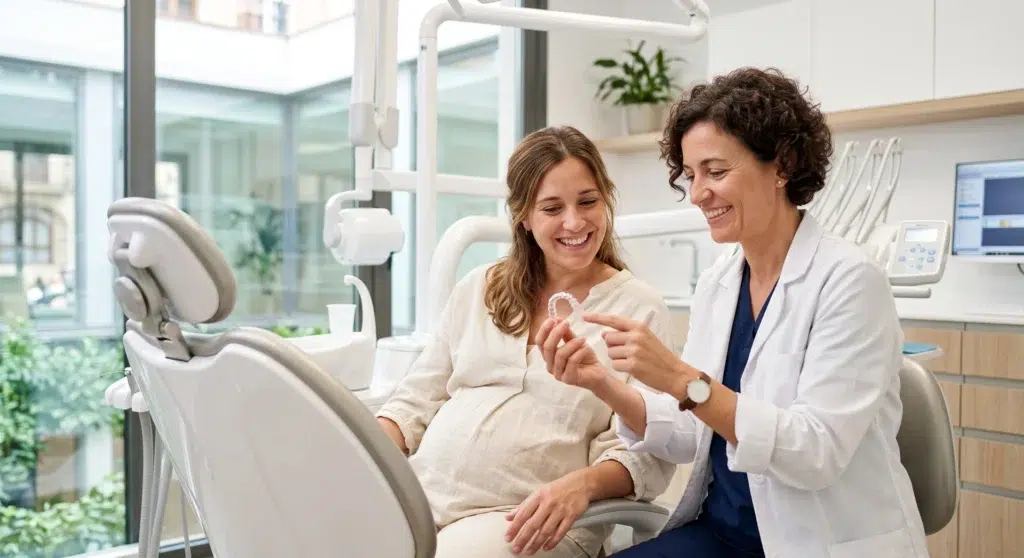
First trimester: caution. This is the period of greatest vulnerability for fetal development and the time when nausea and hormonal changes are most intense. It is not the ideal time to start a new treatment or to have diagnostic tests. If you are already wearing aligners, you can continue to use them as normal.
Second trimester: the most suitable. Between weeks 14 and 28, the pregnancy is more stable, nausea usually subsides, and mobility is comfortable. This is the most recommended time for any non-urgent dental procedure, including starting invisible orthodontics if the diagnosis has already been made.
Third quarter: practical limitations. Abdominal swelling can make sitting in the dental chair uncomfortable for extended periods. Additionally, it's recommended to avoid prolonged supine positions due to the risk of compression of the vena cava. If you're already undergoing treatment, you can continue with your aligners without issue: you can make the adjustments yourself at home, and your follow-up appointments can be spaced further apart.
Free initial diagnostic visit. We'll advise you on the most suitable time for your case.
This is the most important point and the one that generates the most questions. The nuanced answer is:
Conventional dental X-rays. The radiation dose from a panoramic or periapical dental X-ray is very low, and with adequate abdominal shielding (lead apron), the risk to the fetus is minimal. However, the general recommendation is to avoid them unless clinically necessary, especially during the first trimester.
CBCT (cone beam computed tomography). CBCT involves a higher dose of radiation than conventional X-rays. It should be completely avoided during pregnancy except in urgent clinical situations that cannot be delayed. At our clinic, CBCT of the nerve roots is part of the standard initial diagnostic process, so if you are pregnant and have not had a prior diagnosis, we recommend waiting until after delivery to have the full study.
What doesn't need radiation: The iTero 3D intraoral scanner does not emit radiation and can be used without any restrictions during pregnancy. Follow-up visits for ongoing treatment also do not require new X-rays under normal circumstances.
During pregnancy, hormonal changes increase gum sensitivity and promote gingival inflammation, even with proper hygiene. This condition is known as pregnancy gingivitis and affects a significant percentage of pregnant women.
Pregnancy gingivitis can affect invisible orthodontic treatment in several ways:
Greater sensitivity to aligner changes. Swollen gums are more sensitive to pressure, which can make the first few days of each new aligner more uncomfortable.
Need to be extremely hygienic. With invisible orthodontics, hygiene is simpler than with braces, but you have to be especially meticulous: brush the aligners, brush your teeth after every meal, and use dental floss or an irrigator regularly.
Periodontal checkups. If the gums bleed or are very inflamed, a periodontal examination is advisable before continuing treatment. Diseased gums are a relative contraindication for active tooth movement.
You can find more information about gum health in our guide on receding gums and how to prevent them during orthodontic treatment.
It's a common situation: treatment begins, pregnancy occurs unexpectedly, and the question arises of what to do. The good news is that you have options:
Option 1: continue treatment. If you are in your second trimester of pregnancy and your treatment is progressing well, continuing with your aligners is perfectly fine. You should inform your orthodontist so they can adjust your appointment schedule and avoid unnecessary tests.
Option 2: pause temporarily. If you prefer to avoid any worries during pregnancy, you can pause your treatment. In this case, your orthodontist will provide you with a retainer to maintain the current position of your teeth until you can resume treatment after giving birth.
What not to do: Do not stop wearing your aligners without notifying your orthodontist and without using a retainer. Your teeth may shift back to their original position, and when you resume treatment, you may need to repeat phases you have already completed.
Communication with the orthodontist: Inform your healthcare team about your pregnancy as soon as you know. This information is clinically relevant for planning appointments, avoiding unnecessary X-rays, and tailoring your treatment to your specific situation.
The only medication directly related to invisible orthodontic treatment is pain relief for discomfort when changing aligners. During pregnancy, the options are more limited.
Paracetamol. It is the pain reliever of choice during pregnancy for minor discomfort from invisible braces. It can be taken at the usual doses and is the only pain reliever with an acceptable safety profile during pregnancy.
Ibuprofen and NSAIDs: no. They are contraindicated during pregnancy, especially in the first and third trimesters. Their use in the second trimester should only be under medical supervision. Furthermore, as we explain in our guide on pain with invisible braces, ibuprofen interferes with tooth movement.
Local anesthesia. It is not necessary for invisible orthodontic treatment under normal circumstances. If it were necessary for any reason, lidocaine without adrenaline is the safest option during pregnancy.
Pregnancy produces significant hormonal changes, especially in estrogen and progesterone levels, which have a direct effect on periodontal tissue and alveolar bone:
Greater laxity of the periodontal ligament. Pregnancy hormones increase the laxity of ligaments throughout the body, including the periodontal ligament. This can make teeth somewhat more mobile than usual during pregnancy.
Possible effect on the speed of tooth movement. Some studies suggest that this increased periodontal laxity could facilitate tooth movement, although the data are not conclusive. In practice, invisible orthodontic treatment is not significantly accelerated during pregnancy.
Risk of increased post-treatment instability. If treatment ends during pregnancy, the increased hormonal tooth mobility can raise the risk of relapse. That's why it's especially important to wear your retainer consistently during and after pregnancy.
If you paused treatment during pregnancy or started it after delivery, here are some practical considerations:
After childbirth without breastfeeding. You can resume treatment as soon as you feel physically well enough to go to the clinic, usually within a few weeks of giving birth.
Breastfeeding. Invisible orthodontics is completely compatible with breastfeeding. The aligners do not release substances that pass into breast milk. The only point to consider is pain relief in case of discomfort: paracetamol is compatible with breastfeeding; ibuprofen is also safe in occasional doses, although it's advisable to consult your doctor first.
If you paused treatment: The orthodontist will assess the current position of the teeth (which may have changed slightly) and decide whether it is possible to pick up where they left off or if adjustments to the plan are necessary.
If you're starting from scratch: A complete diagnosis can be made without restrictions after delivery. If you are no longer breastfeeding, CBCT and X-rays are completely safe.
Yes, invisible orthodontics is completely compatible with breastfeeding. The aligners do not release substances that can pass into breast milk in significant quantities.
Invisalign SmartTrack material is classified as a biocompatible medical material. Studies of substance migration in similar materials show levels well below any risk threshold.
In practice, many patients begin invisible orthodontic treatment while breastfeeding without any complications. The only additional precaution during breastfeeding is the same as during pregnancy regarding pain relievers: prioritize paracetamol and avoid regular ibuprofen use.
If you want to know more about the treatment and prices, please visit our page. invisible orthodontics prices in Barcelona and includes the first diagnostic visit free of charge.
Continuing an existing Invisalign treatment during the first trimester is possible, although it is the most delicate trimester of pregnancy. Starting a new treatment in the first trimester is not recommended, especially if it requires diagnosis with X-rays or CBCT scans. It is best to wait until the second trimester or postpartum for new treatments.
It's not mandatory. If the treatment is progressing well and the pregnancy is normal, you can continue wearing the aligners throughout your pregnancy. Taking a break is an option if you prefer to avoid any worries, but it requires wearing a retainer to maintain the position of your teeth. Always consult with your orthodontist before making this decision.
No. Invisible orthodontic aligners are made of biocompatible medical-grade plastic that does not release substances in quantities harmful to the body. They do not come into contact with the bloodstream or the baby. They are safe during pregnancy and breastfeeding.
Conventional dental X-rays, with adequate abdominal shielding, have a very low radiation dose and are considered safe when clinically necessary. However, they are best avoided unless absolutely necessary, especially during the first trimester. CBCT scans should be avoided during pregnancy. The iTero 3D intraoral scanner does not emit radiation and can be used without restrictions.
Pregnancy itself does not delay treatment if it continues as normal. What can have an impact is pregnancy gingivitis, which in severe cases may necessitate periodontal treatment before resuming active tooth movement. The increased laxity of the periodontal ligament during pregnancy can make teeth slightly more mobile, but it does not significantly accelerate treatment.
How useful did you find this content?
Click on a star to rate it!
Average score 0 / 5. Vote count: 0
So far, there are no votes! Be the first to rate this content.
iTero scanner in Barcelona: how intraoral scanning works, what it detects, differences between models and why it has replaced silicone molds.

What the first invisible orthodontics visit in Barcelona includes: tests, 3D scan, same-day treatment plan, budget, and what to ask before accepting it.

Invisalign Comprehensive in Barcelona: what complex cases it corrects, when it's not enough, how long it lasts, what unlimited aligners mean, and what the price should include.
THE CLINIC IS CLOSED IN AUGUST.
You can schedule your first visit online now and secure your spot for a free full diagnosis in September.