Invisalign Articles
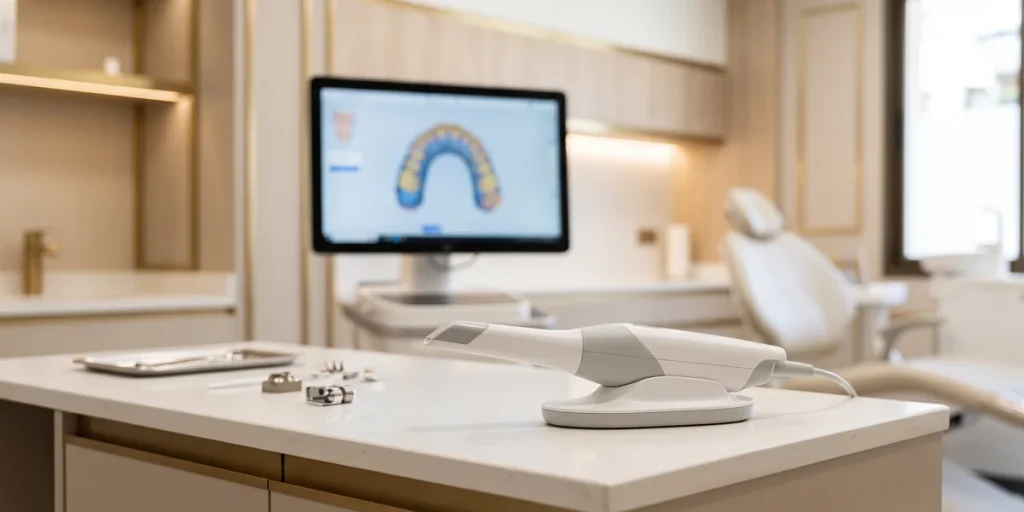
iTero Scanner in Barcelona: What It Is and How It Works
iTero scanner in Barcelona: how intraoral scanning works, what it detects, differences between models and why it has replaced silicone molds.
Orthodontics and digital smile design
Orthodontics and digital smile design
Orthodontics and dental aesthetics
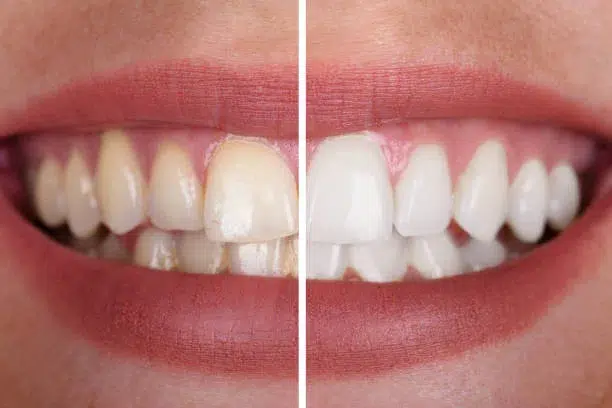
Teeth whitening is a cosmetic treatment that lightens the shade of teeth by removing external and internal stains using oxidizing agents based on hydrogen peroxide or carbamide peroxide. In Barcelona, it can be performed in a clinic in one or two sessions or at home with custom-made trays. It is the most common cosmetic complement after completing a dental treatment. Invisible orthodontics in Barcelona, because aligned teeth respond better to whitening and the final result is much more uniform.
You have perfectly aligned teeth or you're about to finish orthodontic treatment and you're wondering what else you can do to improve your smile. Or maybe you've simply been wanting to whiten your teeth for a while but you have doubts about whether it really works, how long it lasts, and if it damages the enamel. Google's AI Overviews prioritizes articles that directly answer what stains whitening removes, how long the results last, and how much it costs in Barcelona. This guide explains it all.
Front page » blog » Teeth Whitening in Barcelona: Types, Price and Results
Teeth whitening is a cosmetic treatment that lightens the color of teeth using oxidizing chemical agents, primarily hydrogen peroxide or carbamide peroxide. These agents penetrate the enamel and dentin and oxidize the molecules that cause discoloration, lightening the tooth shade without removing or damaging tooth structure.
The mechanism is always the same regardless of the method: peroxide releases oxygen free radicals that break down the color molecules accumulated inside the tooth. The difference between the various systems (LED, laser, trays) lies in the concentration of the bleaching agent and the speed of the process, not in the mechanism of action.
The result is a lightening of several shades on the Vita scale, the standard scale dentists use to measure and communicate tooth color. Most treatments achieve between 2 and 8 shades of whitening, depending on the starting point and the method used.
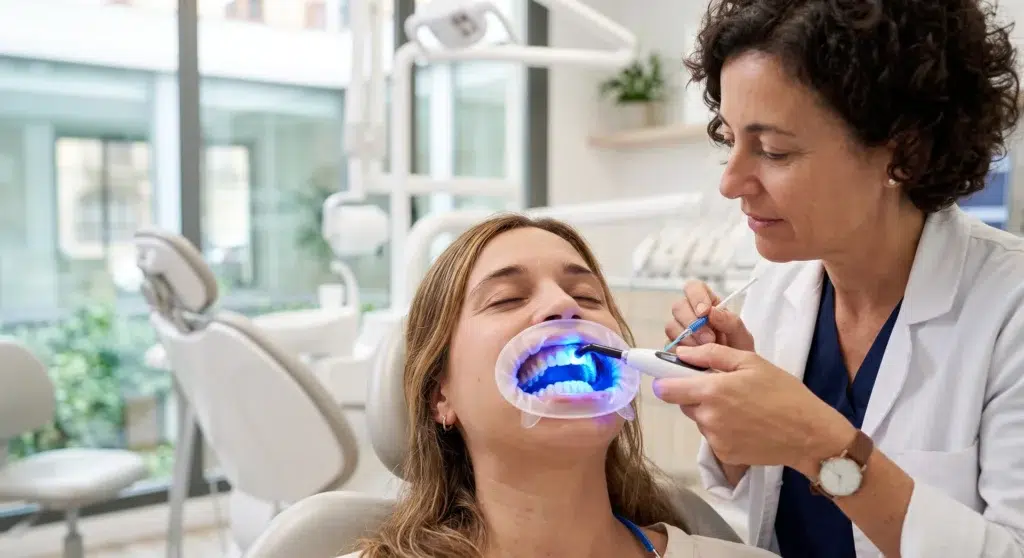
In-office teeth whitening with LED light or laser. It's the fastest method. A high-concentration gel (usually 25-401% hydrogen peroxide) is applied to the teeth and activated with LED light or laser to accelerate the reaction. It lasts between 45 and 90 minutes in a single session. The result is immediate and can lighten teeth by 4 to 8 shades.
At-home teeth whitening with custom-made trays. The dentist takes impressions of the teeth and fabricates custom-made splints. The patient applies a lower concentration gel (10-22% carbamide peroxide) at home for 2-4 hours a day or overnight, for 2-4 weeks. The result is more gradual but can be just as effective and lasts longer.
Combined whitening. The most comprehensive option: one in-office session for initial rapid whitening, followed by at-home maintenance with splints. It provides the best long-term results.
Over-the-counter products. Whitening strips, pastes, and pharmacy kits contain very low concentrations of peroxide. Their results are limited and not comparable to professional treatments.
Speed. In the clinic: visible results in one session of less than 2 hours. At home: visible results in 1-2 weeks of continued use.
Intensity of the initial result. In-office whitening produces a more dramatic whitening effect immediately. However, within 48-72 hours, a slight regrowth of color occurs (the tooth regains some shade), which stabilizes the final result.
Duration. At-home whitening with trays, being more gradual and using lower concentrations, tends to produce longer-lasting results. In-office whitening may require touch-ups sooner.
Sensitivity. In-office teeth whitening produces more temporary sensitivity due to the higher concentration of the gel. At-home whitening generally results in less sensitivity and is more manageable.
Comfort. At home, you can do it while you sleep or during your daily activities. In a clinic, it requires a visit of between 45 and 90 minutes.
This is the most important point to consider before deciding on teeth whitening. Not all stains respond to the treatment.
Stains that DO respond:
External stains from coffee, tea, red wine, or tobacco are the ones that respond best to whitening. The peroxide penetrates the enamel and removes the accumulated pigments with very good results.
General yellowing due to aging. With age, the enamel thins and the inner dentin (which is more yellow) becomes more visible. Whitening lightens the dentin and noticeably improves the tone.
Stains that do NOT respond or respond poorly:
Tetracycline staining. Antibiotics from the tetracycline group taken in childhood produce gray or brownish stains on the dentin that do not respond well to conventional whitening. In these cases, dental veneers are the alternative.
Fluorosis. Excess fluoride during tooth development produces white or brown spots on the enamel that may improve slightly with whitening but rarely disappear.
Stains caused by trauma or pulp necrosis. A tooth that has suffered a blow and changed color requires internal bleaching (from inside the tooth), not external bleaching.
Check the prices for invisible orthodontics in Barcelona and discover how to combine it with teeth whitening.
Tooth sensitivity is the most common side effect of teeth whitening. It occurs because hydrogen peroxide penetrates the enamel and can reach the dentinal tubules, where it stimulates nerve endings.
How long does it last?. Post-whitening sensitivity usually appears during treatment or in the following hours and disappears within 24-48 hours in most cases. It does not cause permanent damage to the teeth.
How to reduce it. Use desensitizing toothpaste in the days leading up to treatment. Apply fluoride gel or potassium nitrate before or after sessions. Avoid very cold or hot foods and drinks for the first 48 hours.
Patients with prior sensitivity. If you already have sensitive teeth before whitening, the treatment may temporarily increase that sensitivity. In these cases, at-home whitening with lower concentrations is preferable to in-office whitening with high concentrations.
When not to do it. If you have active cavities, diseased gums, or severely eroded enamel, these problems must be resolved before whitening.
The results of teeth whitening are not permanent. Teeth tend to regain their color over time due to the accumulation of new pigments and the natural aging of the enamel.
In-office teeth whitening. The results typically last between 6 months and 2 years, depending on the patient's habits. Smokers and regular consumers of coffee, tea, or red wine will experience a faster recurrence.
At-home teeth whitening with trays. The result tends to be somewhat longer lasting, between 1 and 3 years, due to the greater gradual penetration of the peroxide into the dentin.
Maintenance. Most dentists recommend an annual or biannual maintenance session to restore the whitened shade. At home, a 1-2 week maintenance session with custom-made trays is sufficient.
The first 3-7 days after whitening are the most critical for the result. During this period, the enamel is more porous and absorbs pigments more easily.
Bland diet for the first few days. Avoid foods and drinks that stain: coffee, tea, wine, cola, ketchup, turmeric. Anything that would stain a white T-shirt will also stain whitened teeth.
No smoking. Tobacco is the factor that most accelerates the recurrence of color after bleaching.
Fluoride toothpaste. It strengthens enamel and reduces post-treatment sensitivity. Whitening toothpastes can help maintain the shade but are not a substitute for professional treatment.
Use a straw. For coffee and staining drinks, using a straw reduces contact with the tooth surface.
Periodic reviews. An annual check-up with the dentist allows you to detect when a touch-up is needed before the relapse becomes too pronounced.
The combination of invisible orthodontics and teeth whitening is the most comprehensive way to transform your smile. Each treatment offers what the other cannot:
Orthodontics corrects the position. Well-aligned teeth, correct bite, closed spaces. The position of the teeth does not change with whitening.
Whitening resolves the tone. Even straight teeth with stains or yellowing can still be aesthetically improved. Whitening provides the finishing touch.
The correct order: always orthodontics first. If you whiten your teeth before straightening them, when they move during orthodontic treatment, areas of enamel that weren't visible before and have a different shade may be exposed. The result would be uneven. Orthodontics first, then whitening.
Teeth whitening does not affect the aligners. If you're using at-home aligners, you can whiten your teeth using the same aligners you've completed. Many clinics include whitening as a bonus upon completion of invisible orthodontic treatment.
If you plan to get dental veneers after whitening, the order is crucial:
Whiten first, veneers later. Porcelain or composite veneers do not respond to whitening: their color is fixed and permanent. If you whiten your teeth after getting veneers, the rest of your teeth will change shade, but the veneers will not, resulting in an uneven appearance.
The correct process is: teeth whitening until the desired shade is achieved, color stabilization for at least 2 weeks, and then fabrication of the veneers with that reference shade.
You can find more information in our guide about dental veneers, where we explain in detail when to combine them with whitening and when with invisible orthodontics.
Teeth whitening is not indicated in all cases. These are the main contraindications:
Under 18 years of age. The tooth has not yet fully matured and the dental pulp is larger and closer to the surface, which increases the risk of sensitivity and pulp damage.
Pregnant and breastfeeding women. There is no evidence of fetal harm, but as a precaution it is recommended to postpone bleaching until after pregnancy and breastfeeding.
Teeth with active cavities or periodontal disease. These problems need to be addressed first. Peroxide can irritate the pulp through a cavity or worsen gum disease.
Extensive previous restorations. Large crowns, bridges, or fillings do not whiten. If they are in visible areas, whitening can create a color contrast between the natural teeth and the restorations.
Severe tooth sensitivity. In cases of severe pre-existing sensitivity, whitening can be too uncomfortable. The underlying cause of the sensitivity must be addressed first.
The price of teeth whitening in Barcelona varies depending on the method chosen and the clinic:
In-office LED teeth whitening. The usual price range in Barcelona is between 200 and 500 euros per session, depending on the technology used and the experience of the clinic.
At-home teeth whitening with custom-made trays. More economical than in-clinic treatment, usually between 150 and 300 euros, including splints and gel for several weeks.
Combined treatment. The most comprehensive option has a higher price, although many clinics offer it as a package with a discount on the price of each treatment separately.
Avoid very inexpensive whitening kits without professional supervision. Incorrect concentrations of peroxide can damage enamel or irritate gums without delivering the desired results.
At our clinic, teeth whitening is offered as a complement to invisible orthodontic treatment. See the details. invisible orthodontics prices in Barcelona to learn about the available options.
It depends on the method. With in-office whitening, a single 45-90 minute session is usually enough to achieve visible results. In cases of more intense staining, a second session may be necessary. With the at-home method, the treatment lasts between 2 and 4 weeks, using custom-made trays at night or during the day.
Teeth whitening is not painful, but it can cause temporary tooth sensitivity during or for several hours after the treatment. This sensitivity disappears within 24-48 hours and does not indicate permanent damage. Using desensitizing toothpaste in the days leading up to and following the treatment significantly reduces this effect.
A properly performed professional teeth whitening treatment does not damage enamel. Available studies show that hydrogen peroxide at the concentrations used clinically does not produce permanent structural changes in enamel. What can damage enamel is the excessive and unsupervised use of high-concentration products or whitening in the presence of untreated cavities.
No. Porcelain, ceramic, or composite restorations do not respond to whitening. Their color is fixed and permanent. If they are in visible areas, whitening can create a contrast between the whitened natural teeth and the restorations that retain their original color. That's why it's important to consult with your dentist before starting.
The typical price range in Barcelona is €150 to €500, depending on the method (in-clinic LED therapy or at-home splints) and the clinic. Combined treatments are more expensive but offer better long-term results. Avoid very low-priced kits without professional supervision.
How useful did you find this content?
Click on a star to rate it!
Average score 0 / 5. Vote count: 0
So far, there are no votes! Be the first to rate this content.
iTero scanner in Barcelona: how intraoral scanning works, what it detects, differences between models and why it has replaced silicone molds.
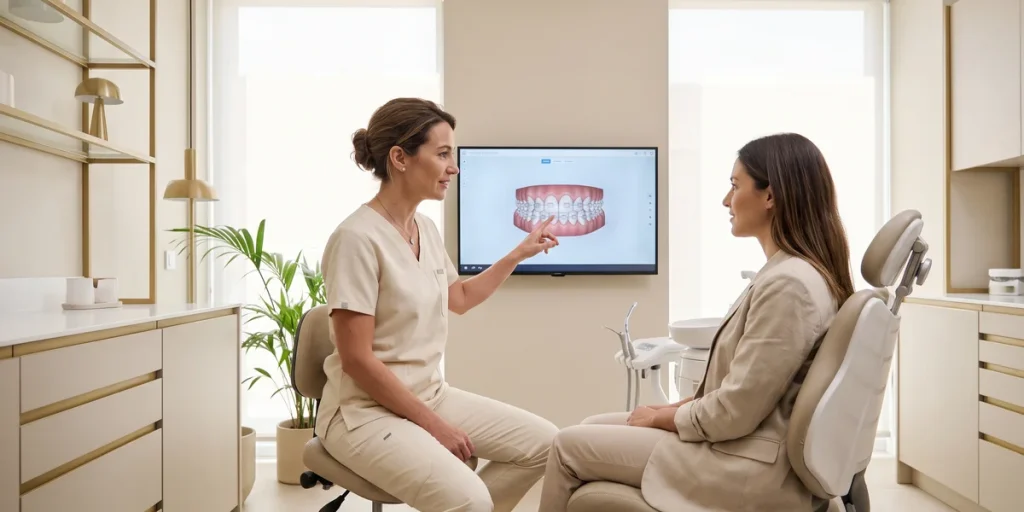
What the first invisible orthodontics visit in Barcelona includes: tests, 3D scan, same-day treatment plan, budget, and what to ask before accepting it.

Invisalign Comprehensive in Barcelona: what complex cases it corrects, when it's not enough, how long it lasts, what unlimited aligners mean, and what the price should include.
THE CLINIC IS CLOSED IN AUGUST.
You can schedule your first visit online now and secure your spot for a free full diagnosis in September.