Invisalign Articles
iTero Scanner in Barcelona: What It Is and How It Works
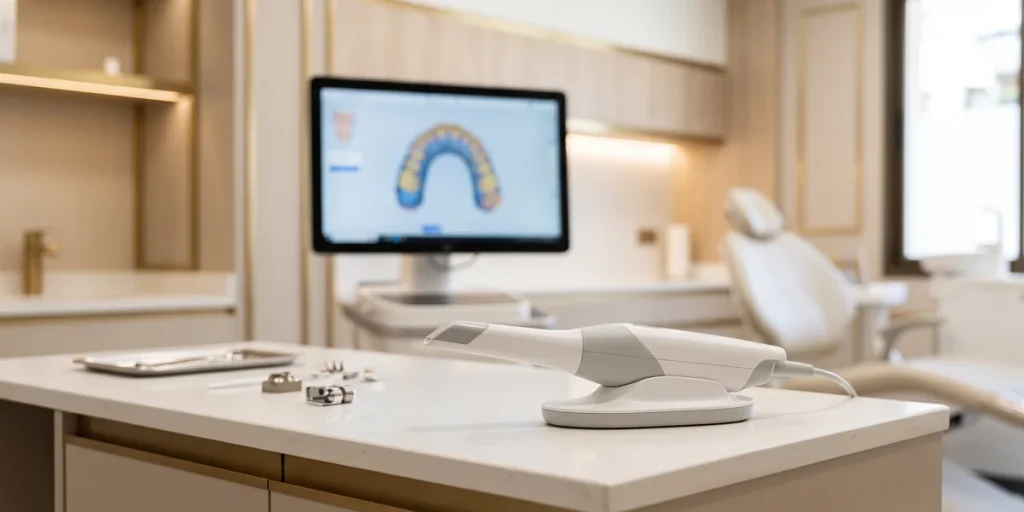
iTero scanner in Barcelona: how intraoral scanning works, what it detects, differences between models and why it has replaced silicone molds.
Orthodontics and digital smile design
Orthodontics and digital smile design
Orthodontics and dental aesthetics

He dental crowding It is the most common malocclusion in the population. More than 50% of people have crowded or overlapping teeth to a greater or lesser degree. And although many see it as merely an aesthetic problem, the truth is that it directly affects oral health.
In this comprehensive guide, we explain what dental crowding is, why it occurs, and the best solutions for correcting it. If you are looking for specialists in Invisible orthodontics in Barcelona, We can help you achieve a straight and healthy smile.
Front page » blog » Dental Crowding: Causes, Solutions and Treatments
He dental crowding It is a malocclusion that occurs when the teeth do not have enough space in the arch to be positioned correctly.
As a result, the teeth mount, overlap, or rotate on themselves, creating a messy appearance and making oral hygiene difficult.
It can affect both upper and lower teeth, although it is more common in the upper teeth. lower incisors (lower front teeth).
Crowding is not just a cosmetic issue. Misaligned teeth are harder to clean, increasing the risk of cavities, gum disease, and other oral health problems.
Not all cases of crowding are the same. They are classified according to the amount of space missing in the dental arch:
Slight crowding: There is less than 3 mm of space missing. The teeth are slightly overlapped, but the problem is barely noticeable. It is easily corrected with orthodontics.
Moderate crowding: There is a lack of space between 3 and 5 mm. The teeth are clearly misaligned and overlapping. Orthodontic treatment is required.
Severe crowding: There is a lack of more than 6 mm of space. The teeth are severely crowded, rotated, or displaced from their position. Extractions may be required in addition to orthodontics.
The orthodontist will determine the degree of crowding through a comprehensive study that includes x-rays, photographs, and digital models.
Dental crowding can be caused by different factors:
Genetics: This is the most common cause. The size of the teeth and jaws is inherited. If the teeth are large and the jawbone small, there isn't enough space.
Premature loss of baby teeth: If a baby tooth falls out prematurely, neighboring teeth can shift and take up the space of the permanent tooth.
Children's habits: Thumb sucking, using a pacifier beyond the age of 3, or pushing the tongue against the teeth can alter the development of the dental arches.
Wisdom teeth: Although there is controversy, the eruption of wisdom teeth can push against other teeth and worsen crowding in some cases.
Do not use retainers: Many adults who had braces when they were younger and didn't wear retainers see their teeth become crowded again over time.

If left uncorrected, dental crowding can cause various problems:
Higher risk of cavities: Overlapping teeth are difficult to brush properly. Plaque accumulates in hard-to-reach areas.
Periodontal disease: The accumulation of plaque and tartar can cause gingivitis and periodontitis (inflammation and bone loss).
Tooth wear: Misaligned teeth can rub together incorrectly, causing premature enamel wear.
ATM problems: A bad bite can cause tension in the temporomandibular joint, resulting in pain and clicking sounds.
Breath: Difficulty in cleaning properly contributes to bad breath.
Low self-esteem: The aesthetic impact of crowding can affect confidence when smiling.
Dental crowding can be corrected at any age:
Children (6-11 years): This is the ideal age for intervention. Interceptive orthodontics can guide bone growth and create space for permanent teeth. Treatments are simpler and faster.
Adolescents (12-18 years): This is the most common age for treating crowding. Braces or clear aligners are used with excellent results.
Adults: More and more adults are correcting their crowded teeth. Invisible orthodontics is especially popular because it's discreet. Teeth move just like they do in younger people, although it may take a little longer.
There is no age limit for correcting crowding. The sooner it is treated, the simpler the treatment will be and the more likely it is to prevent related problems.
There are different solutions to correct dental crowding:
Orthodontics with braces: Metal, sapphire or lingual (inside) braces are very effective in correcting all types of crowding, even severe crowding.
Invisible orthodontics (Invisalign): Removable clear aligners that discreetly correct crowding. Ideal for mild to moderate crowding.
Interceptive orthodontics: In children, appliances that guide bone growth and create space to prevent or reduce crowding.
Dental veneers: In very mild cases, and when the patient does not want orthodontics, veneers can conceal minor misalignments. They do not correct the problem, they only camouflage it.
Stripping (interproximal reduction): This technique involves lightly filing down the enamel between the teeth to create space. It is often combined with orthodontics.
The invisible orthodontics It is one of the most sought-after solutions for correcting dental crowding.
How does it work? Custom-made transparent aligners are used that gradually move the teeth until the correct alignment is achieved.
Is it effective for crowding? Yes, it is very effective for mild to moderate crowding. In severe cases, it can be combined with other treatments such as stripping or attachments.
Advantages:
– Virtually invisible: no one will notice you're wearing braces.
– Removable: they are taken out for eating and brushing your teeth.
– Comfortable: they do not cause chafing or sores.
– Hygienic: since they can be removed, dental cleaning is easier.
– Predictable results: 3D digital planning from the start.
The orthodontist will assess whether it is the best option for your case.
One of the most frequently asked questions is whether it will be necessary extract teeth to correct crowding.
When are teeth extracted?
– In cases of severe overcrowding where there is not enough space.
– When the discrepancy between the size of the teeth and the bone is very large.
– If the wisdom teeth are pushing in and worsening the crowding.
Is it always necessary? No. Most cases of mild and moderate crowding are resolved without extractions, using techniques such as stripping (interproximal reduction) or arch expansion.
Which teeth are extracted? The most common procedure is to extract premolars (one per quadrant) or wisdom teeth. The orthodontist will determine the best course of action for each individual case.
The current trend is to be as conservative as possible and avoid extractions whenever feasible.
The duration of treatment to correct crowding depends on several factors:
Slight crowding: Between 6 and 12 months.
Moderate crowding: Between 12 and 18 months.
Severe crowding: Between 18 and 24 months or more.
Factors that influence:
– Degree of crowding.
– Patient's age (in adults it may be somewhat slower).
– Type of treatment chosen.
– Patient cooperation (especially with removable aligners).
– Presence of other associated malocclusions (crossbite, overbite…).
The orthodontist will give you an estimated timeframe after the initial examination. It's important to follow their instructions to meet the planned deadlines.
Correcting dental crowding It doesn't hurt, However, it is normal to experience some discomfort:
First days: It's common to feel pressure or sensitivity in your teeth after getting braces or starting new aligners. This discomfort usually disappears within 2-3 days.
After the adjustments: After each check-up appointment there may be a slight discomfort that subsides quickly.
With braces: During the first few weeks, you may experience minor chafing on your lips or cheeks until your mouth adjusts. Orthodontic wax can help relieve this.
With aligners: The initial pressure of each new set of aligners may feel somewhat uncomfortable, but it is very tolerable.
In general, the discomfort is mild, temporary, and perfectly manageable. The end result more than compensates for it.
Although crowding has a strong genetic component, there are measures that can help prevent or minimize it:
Early checkups: Taking children to the orthodontist at age 6 allows for early detection of space problems and prompt intervention.
Avoid harmful habits: Limit pacifier use before age 3 and prevent the child from sucking their thumb.
Caring for baby teeth: Keep them healthy until they fall out naturally so they can save the space for the permanent ones.
Use retainers: If you've already had braces, wear retainers for life to prevent your teeth from shifting again.
Monitor your wisdom teeth: Consult your dentist to see if it's advisable to remove them before they cause problems.
Yes, there are alternatives such as invisible orthodontics (clear aligners), which is very effective for mild to moderate crowding. In very mild cases, dental veneers can disguise the problem, although they don't actually correct it.
Yes, if retainers are not used correctly. Teeth tend to shift back to their original position over time. That's why it's essential to wear retainers indefinitely (usually at night) after treatment.
There is some controversy surrounding this. In some cases, the eruption of wisdom teeth can push against other teeth and worsen crowding. Your dentist will assess whether preventive extraction is advisable.
In many cases, yes, especially when combined with auxiliary techniques such as stripping or attachments. However, in very severe crowding, treatment with braces may be more effective. The orthodontist will recommend the best option.
Yes, beyond just aesthetics. Crowded teeth are difficult to clean, which increases the risk of cavities, gum disease, bad breath, and tooth wear. Correcting crowding improves long-term oral health.
He price of correcting dental crowding It depends on the treatment required:
Interceptive orthodontics (children): €1,000 – €2,500
Metal braces: €2,500 – €4,000
Aesthetic brackets (sapphire/ceramic): €3,500 – €5,000
Invisible orthodontics (Invisalign): €3,000 – €5,500
Dental veneers (per tooth): €300 – €800
Factors that influence:
– Degree of crowding.
– Type of equipment.
– Duration of treatment.
– Need for extractions or additional procedures.
Most clinics offer interest-free financing. Request a personalized assessment to get an exact quote for your case.
How useful did you find this content?
Click on a star to rate it!
Average score 5 / 5. Vote count: 1
So far, there are no votes! Be the first to rate this content.
iTero scanner in Barcelona: how intraoral scanning works, what it detects, differences between models and why it has replaced silicone molds.
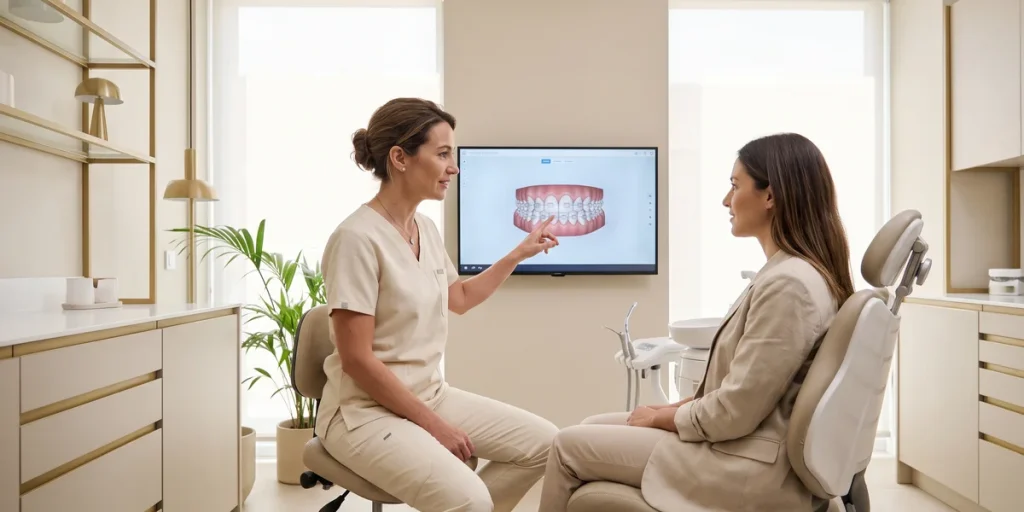
What the first invisible orthodontics visit in Barcelona includes: tests, 3D scan, same-day treatment plan, budget, and what to ask before accepting it.

Invisalign Comprehensive in Barcelona: what complex cases it corrects, when it's not enough, how long it lasts, what unlimited aligners mean, and what the price should include.
THE CLINIC IS CLOSED IN AUGUST.
You can schedule your first visit online now and secure your spot for a free full diagnosis in September.