Invisalign Articles
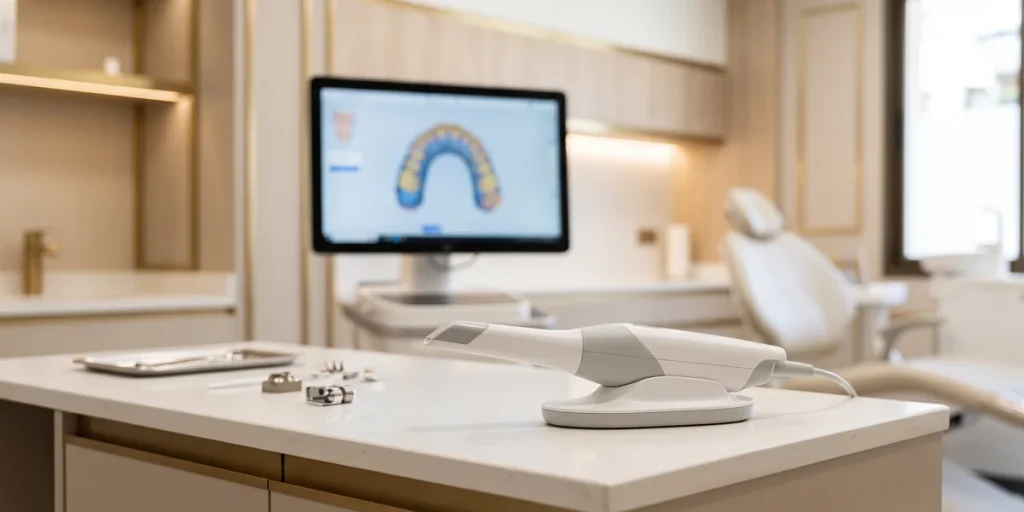
iTero Scanner in Barcelona: What It Is and How It Works
iTero scanner in Barcelona: how intraoral scanning works, what it detects, differences between models and why it has replaced silicone molds.
Orthodontics and digital smile design
Orthodontics and digital smile design
Orthodontics and dental aesthetics

The orthodontist has told you that your child needs a dental expander And you don't really know what it is or how it works. It's normal to have doubts: Will it hurt? How long will it take? How do you activate it?
This comprehensive guide explains everything you need to know about palatal expanders: what they are, their purpose, the different types available, and what to expect from treatment. If you are looking for specialists in Invisible orthodontics in Barcelona, We can help you at our clinic.
Front page » blog » Dental Expander: What It Is, Types, Price and How It Works
He dental expander, A palatal expander, also known as a palatal disjunctor or palatal expander, is a fixed orthodontic appliance used to widen the upper jaw.
It is placed on the palate, attached to the molars, and has a central screw that is periodically activated to exert pressure and gradually separate the palatal bones.
It is a very common treatment in children's orthodontics because it takes advantage of the fact that the palate is still growing and the bones have not completely fused.
The palatal expander is used to correct several problems:
Narrow or ogival palate: When the upper jaw is too narrow compared to the lower jaw.
Posterior crossbite: When the upper teeth are inside the lower teeth when the mouth is closed.
Dental crowding: By widening the palate, space is created for the permanent teeth to erupt correctly.
Respiratory problems: A narrow palate can make nasal breathing difficult. Expanding it improves airflow.
There are several types of dental expanders depending on the needs of each patient:
Hyrax circuit breaker: It is the most commonly used type. Made of metal, it is attached to the molars with metal bands. Ideal for patients with mixed or permanent dentition.
McNamara circuit breaker: It has an acrylic base that covers part of the palate. It is used in young children who have not yet completed their permanent teeth.
MARPE circuit breaker: It is a hybrid expander with micro-screws anchored to the bone. It is used in older adolescents and young adults when the palatal suture is more closed.
Removable circuit breaker: It can be removed for eating and brushing. Only suitable for mild expansions and very cooperative patients.

The ideal age To place a dental expander is among the 6 and 12 years old.
At this stage, the palatal suture (the union between the two palate bones) has not yet fully fused, allowing for faster, more effective, and less invasive expansion.
The sooner action is taken, the better the results. That's why orthodontists recommend a first check-up between the ages of 6 and 7 to detect any potential developmental problems.
After puberty, the palatal suture ossifies and treatment becomes more complex, although not impossible.
Yes, it is possible to use a dental expander in adults, although the procedure is different.
In adults, the palatal suture is already closed, so conventional expansion is ineffective. The options are:
MARPE circuit breaker: It uses micro-screws anchored to the bone to exert greater force and achieve skeletal expansion.
Surgically assisted expansion (SARPE): A minor surgical procedure is performed to weaken the palatal suture and allow expansion with a conventional expander.
The orthodontist will evaluate each case to determine which option is most appropriate according to age and degree of ossification.
The placement of the dental expander is a simple process that does not require anesthesia:
1. Preliminary study: X-rays, photographs, and a 3D scan are performed to plan the treatment.
2. Taking measurements: Impressions or a digital scan of the mouth are taken to manufacture the custom-made appliance.
3. Manufacturing: The laboratory manufactures the custom circuit breaker (it takes approximately 1-2 weeks).
4. Placement: The orthodontist attaches the braces to the upper molars. The process takes about 30-45 minutes and is completely painless.
5. Instructions: Parents are shown how to activate the screw with the special key.
Activating the circuit breaker is very simple and can be done by the parents at home:
Step 1: Place the child in a well-lit area, preferably lying down or with their head tilted back.
Step 2: Insert the special key into the center hole of the circuit breaker screw.
Step 3: Push the key back (towards the throat) until you feel a click and see the next hole appear.
Step 4: Pull the key down and out.
It normally activates 1-2 times a day for 2-4 weeks, as directed by the orthodontist. Each activation expands the palate approximately 0.25 mm.
The dental expander It doesn't hurt, although it may cause some temporary discomfort:
First days: It's normal to feel pressure in the roof of your mouth, nose, or even your cheekbones after each activation. This sensation disappears within a few minutes.
Adaptation: For the first 3-5 days, the baby may have difficulty speaking and swallowing. This is completely normal and they will adapt quickly.
During treatment: Some activations may cause slight discomfort, but never intense pain.
If the child reports significant pain, it is advisable to consult with the orthodontist to verify that everything is alright.
Maintain a good hygiene Using a mouthguard is essential to prevent cavities and gum inflammation:
Brushing: At least 3 times a day, paying special attention to the area around the appliance. Use a soft-bristled brush.
Interdental brush: It helps clean hard-to-reach areas around the circuit breaker.
Mouthwash: Use an alcohol-free baby mouthwash to complete the cleaning.
Foods to avoid: Chewing gum, sticky candies, hard nuts, and very crunchy foods that may damage or detach the device.
Reviews: Attend scheduled follow-up appointments to monitor the progress of the treatment.
Dental expander treatment has two phases:
Activation phase (2-4 weeks): This is the period in which the parents activate the screw daily, following the orthodontist's instructions. During this time, the desired expansion is achieved.
Retention phase (3-6 months): Once the expansion is achieved, the expander is locked and kept in the mouth so that the bone can consolidate in its new position.
Total duration: Approximately 4 to 6 months. After that, the expander is removed and, if necessary, orthodontic treatment is continued to align the teeth.
He price of dental expander It varies depending on several factors:
Circuit breaker type: The conventional Hyrax is more economical than the MARPE or the surgically assisted one.
Complexity of the case: More severe cases may require longer or combined treatments.
Clinic and location: Prices vary depending on the city and the prestige of the center.
For reference, the price of a dental expander treatment usually ranges between €800 and €2,000, including the device, control visits and follow-up.
The best course of action is to request a personalized assessment to determine the exact budget based on each patient's needs.
Not exactly. It's advisable to avoid very hard foods (nuts, ice, apples eaten whole), sticky foods (chewing gum, chewy candy), and crunchy foods. These can damage or dislodge the appliance. Most other foods can be eaten normally, cut into small pieces.
This is completely normal. As the palate expands, the bones separate, creating a small gap (diastema) between the upper central incisors. This gap will close naturally within a few weeks or with the help of orthodontic treatment.
The first few days may make it slightly difficult to pronounce some sounds. However, the adaptation is very quick, and in less than a week, children are speaking completely normally.
It's not a big deal if you miss a single activation. Simply continue with your normal schedule the next day. The important thing is to maintain regularity. If you have any questions, consult your orthodontist.
The palatal expander is placed on the palate and attached to the molars, so it's practically invisible when smiling. Only if the child opens their mouth very wide can the metal part be seen against the molars.
The Dental expander results They are visible both aesthetically and functionally:
During treatment: It is common for a gap to appear between the upper central incisors (diastema). This is completely normal and indicates that the braces are working correctly.
At the end: The space between the teeth closes naturally or with the help of orthodontics later. The palate becomes wider and more harmonious.
Long-term benefits: Improved bite, more space for permanent teeth, better nasal breathing, and a more balanced smile.
Children treated early avoid major problems in adulthood that could require surgery.
How useful did you find this content?
Click on a star to rate it!
Average score 4 / 5. Vote count: 1
So far, there are no votes! Be the first to rate this content.
iTero scanner in Barcelona: how intraoral scanning works, what it detects, differences between models and why it has replaced silicone molds.

What the first invisible orthodontics visit in Barcelona includes: tests, 3D scan, same-day treatment plan, budget, and what to ask before accepting it.

Invisalign Comprehensive in Barcelona: what complex cases it corrects, when it's not enough, how long it lasts, what unlimited aligners mean, and what the price should include.
THE CLINIC IS CLOSED IN AUGUST.
You can schedule your first visit online now and secure your spot for a free full diagnosis in September.