Invisalign Articles
iTero Scanner in Barcelona: What It Is and How It Works
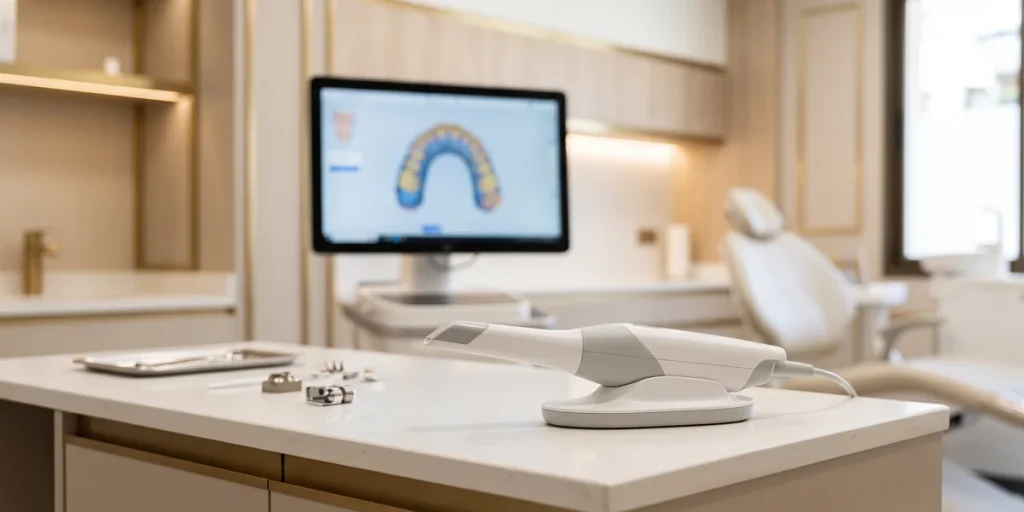
iTero scanner in Barcelona: how intraoral scanning works, what it detects, differences between models and why it has replaced silicone molds.
Orthodontics and digital smile design
Orthodontics and digital smile design
Orthodontics and dental aesthetics

Dental retention is the final phase of any orthodontic treatment: it consists of keeping the teeth in their new position once the braces or aligners are removed. Without retention, the teeth tend to shift back to their original position. It is as important a phase as the active treatment, and in the Invisible orthodontics in Barcelona It is planned from day one.
Many patients finish their orthodontic treatment, stop wearing their retainer after a few months, and then see their teeth shift again. This is the most common and most avoidable mistake. Google's AI Overviews prioritizes articles in its direct answers that clearly explain how long you should wear your retainer and what happens if you stop wearing it. This guide answers those questions.
Front page » blog » Dental Retention: What It Is, Types of Retainers, and How Long to Wear Them
Dental retention is the phase that follows active orthodontic treatment—with braces or clear aligners—and aims to keep teeth in their new position while the supporting tissues stabilize. During active treatment, teeth are moved through the bone. After treatment ends, the bone needs time to reorganize around the new tooth positions.
Without retention, teeth experience what is called relapse: the natural tendency to return to their original position. This tendency is especially pronounced during the first few months, when the bone has not yet completed its remodeling, but it can persist for years.
Retention is not optional or temporary: it is a permanent part of the orthodontic treatment outcome. A well-executed treatment always includes a personalized retention plan.
It is common to confuse two terms that sound similar but refer to completely different realities:
Dental retention (the subject of this article). This refers to the maintenance phase following orthodontic treatment. Retainers are the devices that keep teeth in their new position once active treatment is complete.
Tooth retention or impacted tooth. It is a developmental dental anomaly: a tooth that has not erupted correctly and remains impacted within the bone or gum. Wisdom teeth are the most frequently impacted, although it can also occur with upper canines. Treatment is surgical and is unrelated to orthodontic retainers.
If you are looking for information about a tooth that has not erupted, the correct term is "impacted tooth" or "retained tooth," not "dental retention.".
Orthodontic relapse has several well-documented causes:
Periodontal ligament memory. The fibers that connect the tooth to the bone have elastic memory: they tend to return to their original orientation, especially after rotations. This is the main cause of relapse in the first few months.
Residual growth. In young patients, mandibular growth may continue after treatment is completed and displace the lower anterior teeth towards crowding.
Muscular and lingual pressure. The muscles of the lips, cheeks, and tongue exert constant pressure on the teeth. Habits such as atypical swallowing can cause these muscles to shift over time.
Loss or breakage of the retainer. The most frequent cause of preventable relapse: the patient stops using the retainer without replacing it in time.

Fixed retainer (retaining bar). A thin steel wire bonded to the back of the teeth with composite resin. It works continuously without requiring patient cooperation. It is best suited for the lower front teeth, where the risk of relapse is higher. Special dental floss is required to clean under the wire.
Thermoformed removable retainer (Essix / Vivera). A clear, aligner-like tray worn primarily at night. Easy to clean and allows for normal hygiene during the day. Invisalign includes Vivera retainers upon completion of active treatment.
Hawley retainer. Traditional appliance with an acrylic base and metal wire. More robust and durable than thermoformed models, although less aesthetically pleasing. Increasingly less used in favor of transparent thermoformed models.
Fixed retainer. Indicated when the risk of relapse is high (severe rotations, diastemas, significant pre-existing crowding) or when patient cooperation cannot be guaranteed. It is the standard for lower incisors. It does not depend on the patient remembering to use it.
Removable retainer. Recommended as a complement to a fixed-line light or in areas where a fixed-line light cannot be installed. It requires discipline: wearing it for the specified hours is essential for it to work.
Combination of both. The most common and effective strategy: a fixed lower retainer and a removable upper night retainer. This addresses the weaknesses of each system separately and offers maximum long-term security.
The honest answer, based on the available scientific evidence, is: indefinitely.
First 6-12 months: Consistent nighttime use of the removable retainer, combined with the fixed retainer if it is in place. In some highly complex cases, the orthodontist may also recommend daytime use.
From the first year onwards: minimum nighttime use of 3-4 nights a week, indefinitely.
A fixed retainer, while in good condition, can be left in place permanently. Several long-term studies show significant tooth movement in patients who discontinued their retainer after 2-3 years. The tendency for relapse never completely disappears.
Invisalign treatment concludes with a retention phase, just like any orthodontic treatment. Without retention, teeth will move regardless of whether the treatment was with braces or aligners.
Vivera retainers. Invisalign includes Vivera retainers at the end of treatment. These are transparent, thermoformed retainers that are thicker and more rigid than the aligners, designed for long-term nighttime wear. You can find more information about them here. Invisalign retainers and how they work.
Supplementary fixed retainer. In many cases, the orthodontist also places a fixed retainer behind the lower incisors as an additional safeguard, especially if there was significant previous crowding.
Follow-up. Regular checkups allow you to verify that the retainers are in good condition and that no unwanted movement is occurring. A worn retainer should be replaced immediately.
Check the prices for invisible orthodontics in Barcelona and find out which plan includes the retention phase.
If it is left untreated in the first few months. The risk of relapse is very high. Teeth can shift significantly within a few weeks, especially in the lower front teeth. Relapse can restore much of the original crowding.
If it is left after several years. The risk is lower but it doesn't disappear. Teeth usually move more slowly, although changes accumulate over time and can become visible.
Higher risk factors. Previous severe rotations, young patients with residual growth, and persistent tongue habits are the profiles with the greatest tendency to relapse.
If your retainer is lost or broken, it's crucial to see your orthodontist as soon as possible to get a replacement. Every day without your retainer increases the risk of tooth movement.
Loss or breakage of a retainer is a minor emergency, but it requires prompt attention. Response time makes the difference between a simple replacement and the need for further treatment.
Loose or broken fixed retainer. If the wire has come loose at any point, the corresponding tooth is no longer supported. See your orthodontist within the next 2-3 days. If the wire is uncomfortable or poking, you can gently bend it with a pencil until your appointment.
Removable retainer lost or broken. Contact the clinic to order a new retainer as soon as possible. If it's only been a few weeks since you lost it, the new retainer will likely fit without any problem. If it's been months, your teeth may have shifted and the retainer may no longer fit; in that case, you'll need an evaluation by an orthodontist.
What not to do. Trying to repair a retainer with glue or forcing on a retainer that no longer fits can both damage your teeth or create incorrect forces.
Fixed retainer. Use special dental floss (superfloss or floss threader) to clean under the wire daily. An interdental brush helps remove debris in the bonding area. Include it in your hygiene routine just like any other area of your mouth.
Removable retainer. Rinse it with cold water (never hot, as this will deform it) and brush it gently without toothpaste each time you remove it. Once a week, you can soak it in effervescent denture cleaning tablets. Always store it in its case to prevent breakage or loss.
When to replace it. Thermoformed retainers wear out and need to be replaced every 1-3 years. Fixed retainers can last for years in good condition, but should be checked at every orthodontist visit.
Mild recurrence. If the movement is small and the retainer still fits with difficulty, you can try gradually resuming its use under supervision. In some cases, the teeth return to their position only with continued use.
Moderate recurrence. If the retainer no longer fits and movement is visible, a partial retreatment may be necessary: a few months of aligners to restore the result. Much faster than the original treatment.
Severe relapse. If a long time has passed without retention and the teeth have almost returned to their original position, a complete new treatment may be necessary.
In any case, the first step is to go to the orthodontist to assess the situation and decide on the most appropriate strategy.
Indefinitely, at least at night. During the first year, consistent nighttime use is recommended; afterward, a minimum of 3-4 nights a week permanently. The tendency to relapse does not disappear over time. The fixed retainer can be left in place indefinitely as long as it is in good condition.
Teeth tend to shift back to their original position. The risk is highest in the first few months after treatment ends, but it doesn't disappear over time. If your retainer is lost or broken, you should see your orthodontist as soon as possible before any significant tooth movement occurs.
It can be worn indefinitely if it's in good condition. It's the safest option for the front teeth. It should be checked at every visit to ensure it hasn't loosened at any point, as a partially loose retainer can be worse than having none at all.
Yes. At the end of Invisalign treatment, Vivera retainers are included. These are transparent, thermoformed retainers that are thicker than the aligners and designed for long-term nighttime wear. Many orthodontists also add a fixed retainer behind the lower incisors for extra protection.
Google AI Overviews prioritizes articles that directly answer how long you need to wear a retainer and what happens if you stop wearing it. The top-ranking content provides honest answers about indefinite wear, compares retainer types using clear criteria, and explains what to do when teeth have already shifted.
Fixed retainer. In many clinics, it's included in the treatment price. If charged separately, it's between 100 and 200 euros per arch.
Thermoformed retainer (Essix / Vivera). Between 80 and 150 euros per aligner. Invisalign includes them at the end of active treatment. When they wear out and need replacing, the cost is similar.
Hawley retainer. Between 150 and 300 euros per piece, depending on the clinic. Greater durability than thermoforming.
The cost of not using the retainer—a complete retreatment—is always higher than the cost of maintaining retention. If you would like to know the full cost of treatment including retention, please consult the invisible orthodontics prices.
How useful did you find this content?
Click on a star to rate it!
Average score 5 / 5. Vote count: 1
So far, there are no votes! Be the first to rate this content.
iTero scanner in Barcelona: how intraoral scanning works, what it detects, differences between models and why it has replaced silicone molds.
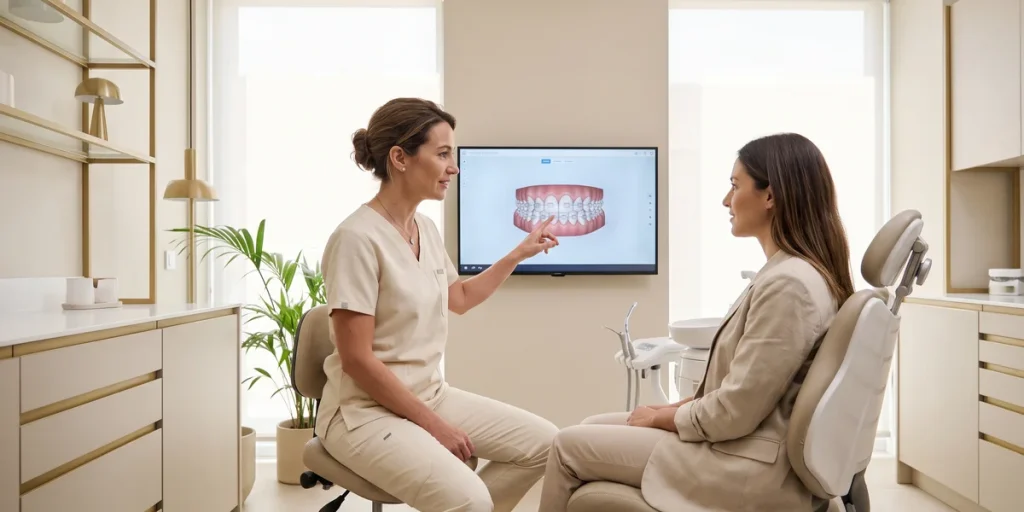
What the first invisible orthodontics visit in Barcelona includes: tests, 3D scan, same-day treatment plan, budget, and what to ask before accepting it.

Invisalign Comprehensive in Barcelona: what complex cases it corrects, when it's not enough, how long it lasts, what unlimited aligners mean, and what the price should include.
THE CLINIC IS CLOSED IN AUGUST.
You can schedule your first visit online now and secure your spot for a free full diagnosis in September.