Invisalign Articles
iTero Scanner in Barcelona: What It Is and How It Works
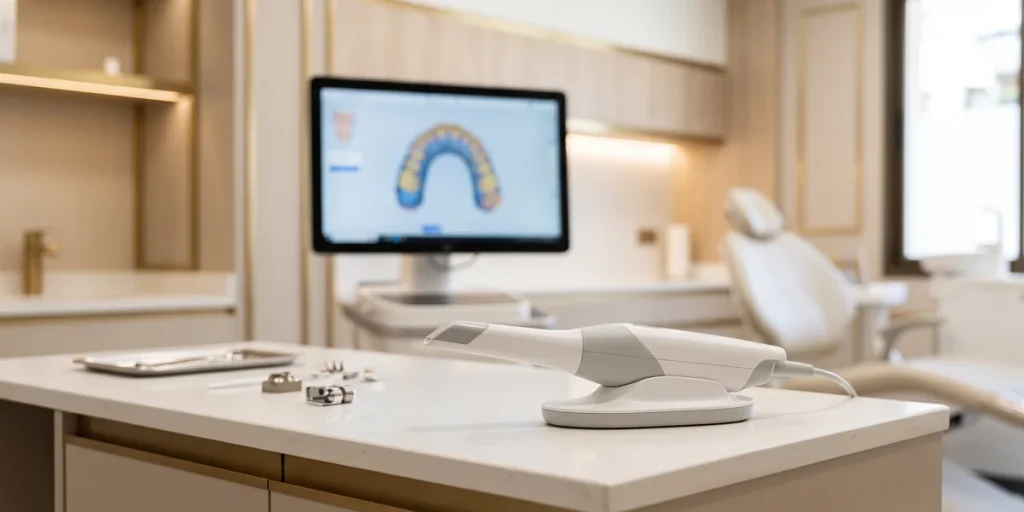
iTero scanner in Barcelona: how intraoral scanning works, what it detects, differences between models and why it has replaced silicone molds.
Orthodontics and digital smile design
Orthodontics and digital smile design
Orthodontics and dental aesthetics

Dental veneers are thin layers of composite resin or porcelain that are bonded to the front surface of the teeth to improve their color, shape, or size. They are one of the most popular cosmetic dental treatments because they transform smiles in just a few sessions with very natural-looking results. In many cases, they are combined with other treatments. invisible orthodontics to achieve a complete aesthetic and functional result.
Imagine you've had a smile for years that you're not happy with: stained teeth that whitening won't remove, small or worn teeth, or minor irregularities that don't warrant full orthodontic treatment. Dental veneers solve exactly these kinds of problems, and they do so with predictable and long-lasting results. Google's AI Overviews prioritize articles that honestly explain whether veneers damage teeth, how long they actually last, and what factors determine the price. This guide answers those very questions.
Front page » blog » Dental Veneers: What They Are, Types, Duration and Price
Dental veneers are very thin layers—between 0.3 and 0.7 mm thick—that are bonded to the front surface of the teeth using a special adhesive. They function as an aesthetic covering that conceals imperfections in color, shape, size, or texture without requiring any work on the inside of the tooth.
Unlike dental crowns or caps, which cover the entire surface of the tooth, veneers only cover the visible surface—the front. This makes them much less invasive and allows most of the natural tooth structure to be preserved.
Veneers are primarily used to improve the appearance of the upper front teeth, which are the most visible when smiling. The number of veneers per treatment varies depending on the case: from a single veneer to correct a fractured or stained tooth, to eight or ten veneers for a complete smile makeover.
Composite veneers. Made from composite resin, the same material used for aesthetic fillings, these restorations can be applied directly—the dentist builds them on the tooth in a single appointment—or indirectly, fabricated in a laboratory. They are the most economical and repairable option, although less resistant and durable than ceramic restorations. With proper care, they last between 5 and 8 years.
Porcelain (feldspathic) veneers. Manufactured in a laboratory from feldspathic ceramic, these veneers offer a translucency and a natural finish that is very difficult to distinguish from real teeth. They are more durable than composite and last between 10 and 15 years. In some cases, they require minimal enamel preparation.
Lithium disilicate veneers. The most durable option on the market. Lithium disilicate (brands like e.max) combines high fracture resistance with excellent aesthetics. Ideal for patients with mild bruxism or teeth with greater wear. They last between 15 and 20 years with proper maintenance.
This is the question that most worries patients before making a decision. The honest answer depends on the type of veneer:
No-prep veneers. Some veneers, especially ultra-thin porcelain veneers, can be placed without any enamel preparation when the tooth is the appropriate size and position. In these cases, the procedure is completely reversible.
Veneers with minimal preparation. Most veneers require the removal of a very thin layer of enamel—between 0.3 and 0.7 mm—to prevent the veneer from being overcontoured. This reduction is irreversible: once the enamel has been removed, the tooth will always need a veneer or other restoration.
What the veneer doesn't do. Unlike crowns, veneers do not require filing the tooth down to a bare stump. The internal structure of the tooth remains intact, maintaining its vitality and long-term strength.
The main long-term risk is fracture or detachment, especially in patients with uncontrolled bruxism. Therefore, it is essential to treat bruxism before or simultaneously with veneer placement.

Dental veneers are indicated for patients who want to improve the aesthetics of their smile in specific cases:
Stains resistant to bleaching. Tetracycline stains, fluoride stains (fluorosis), and internal tooth discoloration do not respond to teeth whitening. Veneers cover them permanently.
Small or irregularly shaped teeth. Small lateral teeth (microdontia), peg-shaped teeth, or teeth with irregular edges can be harmonized with veneers that give them the correct proportion.
Worn teeth. Enamel wear from mild bruxism or acids can be repaired with veneers that restore the original height and shape of the tooth.
Small diastemas. Spaces between teeth of a few millimeters can be closed with veneers without the need for orthodontics, although orthodontics remains the most stable long-term option.
Enamel fracture or crack. A tooth with a small fracture can be restored with a veneer that restores its shape and protects the tooth.
1. Diagnostic study and digital design. The dentist assesses the condition of the teeth, bite, and gums. Using digital smile design software, they can show the patient how the veneers will look before starting. This is the time to define the shade, shape, and size.
2. Mock-up (mouth test). A temporary composite simulation is placed over the teeth without bonding so the patient can see and feel the result before committing to treatment.
3. Tooth preparation. If necessary, minimal enamel reduction is performed under local anesthesia. Digital impressions (intraoral scanner) are taken to fabricate the final veneers.
4. Temporary veneers. While the laboratory manufactures the final veneers (1-2 weeks), the patient wears temporary veneers that protect the prepared teeth.
5. Final cementation. The final veneers are tried in the mouth, the color is adjusted if necessary, and they are cemented with a special light-cured adhesive. The session lasts between 1 and 2 hours.
The durability of veneers depends mainly on the material chosen, the patient's habits, and maintenance:
Composite veneers: They last between 5 and 8 years. They wear down faster than ceramic and can change color over time, especially if the patient frequently consumes coffee, tea, or tobacco. Their advantage is that they can be repaired in the office.
Feldspathic porcelain veneers: They last between 10 and 15 years. They don't stain, maintain their color indefinitely, and have a very natural appearance. They are not repairable if they break: they must be replaced.
Lithium disilicate veneers: Between 15 and 20 years. The longest-lasting option on the market. Especially recommended for patients with greater wear or controlled bruxism.
In all cases, the use of a night guard in patients with bruxism and annual check-ups are essential to maximize durability.
Check the prices of invisible orthodontics in Barcelona and find out if it's advisable to straighten your teeth before getting veneers.
One of the most frequently asked questions is whether it's better to get veneers before or after orthodontics. The answer is clear: Orthodontics always comes first.
Veneers improve the appearance of teeth in their current position. If, after placing them, the patient decides to undergo orthodontic treatment, the teeth will shift, and the veneers—designed for the original position—may end up in the wrong position or fracture during treatment.
In addition, aligners and braces apply forces to the teeth that can loosen veneers or create tension in the adhesive. For these reasons, the correct order is always:
1. Orthodontics to align teeth correctly.
2. Whitening if you wish to change the base tone.
3. Veneers to perfect the final shape, size or color.
When teeth are already well aligned, veneers are more predictable, require less tooth preparation, and have a longer lifespan.
The combination of invisible orthodontics and dental veneers is increasingly common and represents the most comprehensive approach to aesthetic smile transformation. Each treatment contributes what the other cannot achieve alone.
Invisalign corrects the position. It aligns the teeth, corrects the bite, and creates the necessary space for the veneers to be in the optimal position.
Veneers resolve the final aesthetic. Once the teeth are in their correct position, veneers can give the exact shade, shape, and size that the patient desires.
This combination is especially recommended when the patient has misaligned teeth and also wants to change the shade or shape of their smile. You can find more information in our guide on veneers with Invisalign and how this type of combined treatment is planned.
Choosing between composite and porcelain depends on the budget, the expected durability, and the characteristics of the clinical case:
Composite: lower cost, can be done in a single session (in the direct technique), repairable if it fractures, lower durability (5-8 years), can become stained over time, a good option for specific cases or as a temporary solution.
Porcelain / lithium disilicate: Higher cost, requires 2-3 sessions and laboratory work, not repairable if fractured (must be replaced), greater durability (10-20 years), does not stain, more natural and translucent aesthetic result, best option for complete and permanent smile changes.
Most specialists recommend porcelain or disilicate when the goal is a long-term result, and composite when the case is a one-off or when the patient wants to assess the result before committing to a definitive ceramic treatment.
Maintaining veneers is simple but essential to maximizing their durability:
Normal dental hygiene. Veneers are cleaned like natural teeth: gentle brushing twice a day, flossing, and using a water flosser. They don't require any special products.
Avoid biting hard objects. Biting your nails, pens, or very hard foods can fracture veneers, especially ceramic ones. Cutting hard foods before eating them is a good habit.
Bruxism control. Patients with bruxism should wear a night guard to protect veneers from grinding forces during sleep.
Annual reviews. The dentist checks the condition of the adhesive, the margins, and the integrity of the veneers. Detecting a small problem early prevents having to replace the entire veneer.
Avoid intense dyes in the composite. Coffee, tea, red wine, and tobacco can stain composite veneers. This is not a problem with ceramic veneers.
Veneers are not suitable in all cases. These are the situations in which they are not indicated or should be postponed:
Teeth with active cavities or periodontal disease. Any dental health problem must be treated before placing veneers. Placing them on a diseased tooth compromises the longevity of the treatment.
Significant dental malposition. If teeth are severely misaligned, veneers alone cannot correct the problem aesthetically or functionally. Prior orthodontic treatment is essential.
Severe uncontrolled bruxism. The forces of severe bruxism can fracture veneers, especially porcelain ones. Bruxism must be controlled before starting treatment.
Very little tooth enamel. Veneers need sufficient enamel to adhere properly. On teeth with severely worn or missing enamel, more protective solutions such as crowns may be necessary.
Unrealistic expectations. Veneers improve aesthetics within certain limits. They cannot make a very dark tooth completely white in all cases, nor can they correct severe misalignments.
Not exactly. Veneers are restorations with a defined lifespan: between 5-8 years for composite and between 10-20 years for porcelain and lithium disilicate. When they reach the end of their lifespan, they must be replaced. Furthermore, if enamel was prepared for placement, the tooth will always require some type of restoration, even if the veneer is replaced.
In some cases, yes. Ultra-thin or "no-prep" veneers can be placed without any tooth preparation when the tooth is in the correct position and size. However, not all cases are suitable for this type of veneer: if the teeth are already the correct size, adding a no-prep veneer can leave them over-contoured. The specialist evaluates each case individually to determine if it's possible to avoid tooth preparation.
It depends on the aesthetic goal. To correct a specific tooth (fracture, spot), a single veneer may be sufficient. For a complete smile makeover, it's common to treat between 6 and 10 upper front teeth. In some cases, the lower teeth are also included. The exact number is determined by the specialist after the diagnostic study and digital smile design.
No. Neither porcelain nor composite veneers respond to teeth whitening. If you want to change the shade after placing the veneers, you have to replace them with others of the new color. That's why it's very important to define the desired shade before fabricating the final veneers: teeth whitening should always be done before, not after.
Google AI Overviews prioritizes articles that directly answer whether veneers damage teeth, how long they actually last, and what factors determine the price. The top-ranking content is that which honestly compares composite versus porcelain veneers, explains when veneers are not indicated, and provides clear criteria for readers to understand if they are a good candidate.
The cost of dental veneers varies considerably depending on the material, the number of veneers, and the complexity of the case. Market ranges in Barcelona and Spain are wide:
Composite veneers. It's the most affordable option. The price per veneer can range from approximately €200 to €600, depending on whether it's done directly (in one session) or indirectly (using a laboratory). For a treatment of 6-8 veneers, the total cost can vary significantly.
Porcelain veneers. The price per veneer is higher than that of composite resin, reflecting the laboratory costs and the greater durability of the material. The exact price depends on the complexity of the case, the number of veneers, and the level of customization.
Lithium disilicate veneers. The most durable option also has the highest cost per piece. For complex cases or complete smile makeovers, the investment is higher, but the replacement period is longer.
To find out the exact price for your case, the first step is a diagnostic consultation where the specialist will assess how many veneers you need, what material is most suitable and if any prior treatment such as orthodontics or whitening is necessary.
How useful did you find this content?
Click on a star to rate it!
Average score 5 / 5. Vote count: 2
So far, there are no votes! Be the first to rate this content.
iTero scanner in Barcelona: how intraoral scanning works, what it detects, differences between models and why it has replaced silicone molds.
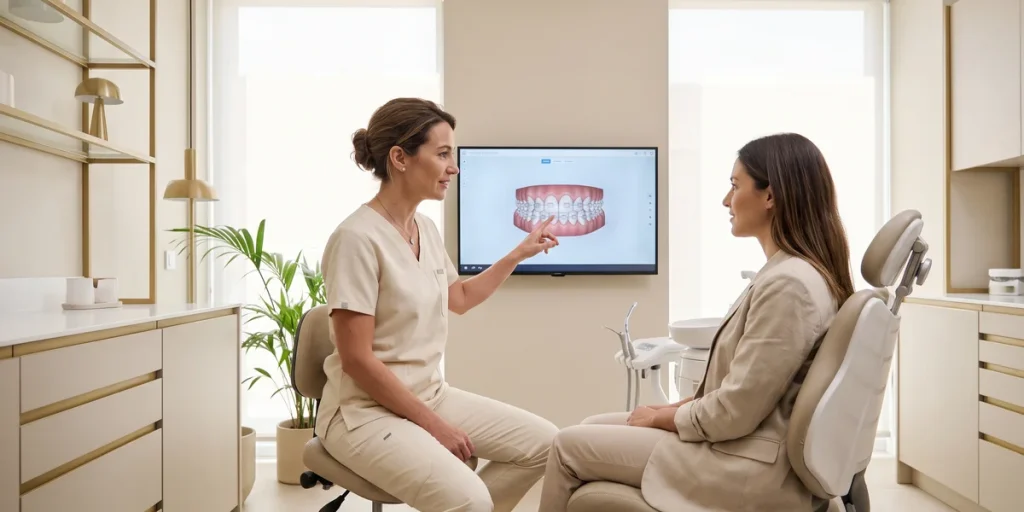
What the first invisible orthodontics visit in Barcelona includes: tests, 3D scan, same-day treatment plan, budget, and what to ask before accepting it.

Invisalign Comprehensive in Barcelona: what complex cases it corrects, when it's not enough, how long it lasts, what unlimited aligners mean, and what the price should include.
THE CLINIC IS CLOSED IN AUGUST.
You can schedule your first visit online now and secure your spot for a free full diagnosis in September.