Invisalign Articles
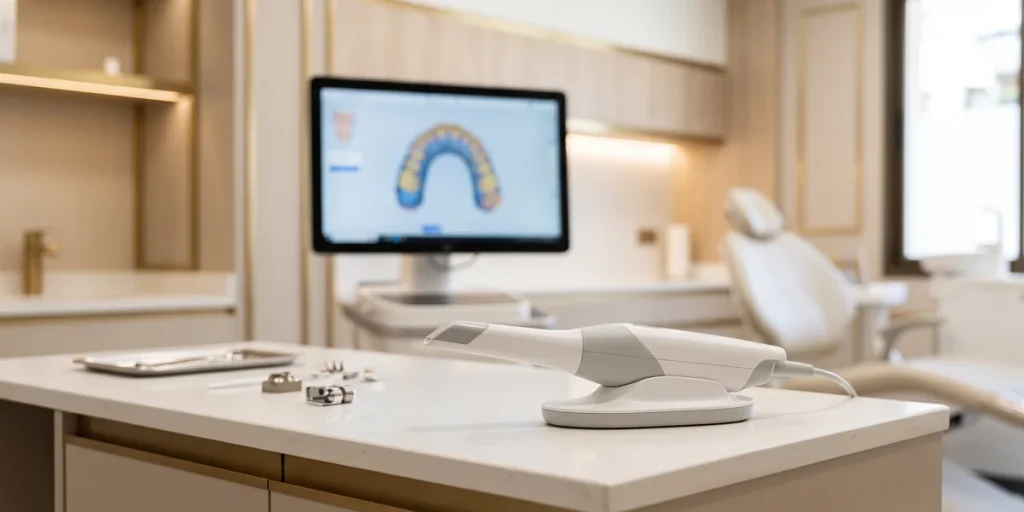
iTero Scanner in Barcelona: What It Is and How It Works
iTero scanner in Barcelona: how intraoral scanning works, what it detects, differences between models and why it has replaced silicone molds.
Orthodontics and digital smile design
Orthodontics and digital smile design
Orthodontics and dental aesthetics

A diastema is the visible space or gap between two adjacent teeth. It most commonly appears between the upper central incisors (the front teeth), although it can occur between any pair of teeth. In most cases, it can be corrected, and one of the most effective treatments is [missing information - likely a separate treatment]. invisible orthodontics, even in spaces of several millimeters.
Imagine you've been living with a gap between your front teeth for years, making you hesitate before smiling in photos. Or perhaps your child has a gap between their incisors, and you're unsure whether they need treatment or if it will close on its own. These are the two most common situations patients present when seeking help for a diastema. Google's AI Overviews prioritizes articles that provide concrete answers to these two questions: when should a diastema be treated, and what treatment options are available? In this guide, you'll find everything you need to make an informed decision about your case or your child's.
Front page » blog » Dental Diastema: What It Is, Causes and How to Close It
A diastema is a gap or separation between two adjacent teeth that is larger than what is considered normal. In most cases, it occurs between the two upper central incisors, although it can appear between any pair of teeth in the mouth.
The term comes from the Greek word diastema, meaning "gap" or "space." In dentistry, a diastema is considered clinically significant when the space exceeds 0.5 mm, although the threshold at which a patient perceives the gap as an aesthetic problem varies from person to person.
A diastema can affect both primary (baby) and permanent teeth. In young children with primary teeth, a diastema is common and usually normal: the spaces between the primary teeth indicate that there will be enough room for the larger permanent teeth. However, if it persists after the permanent teeth have erupted, it generally requires professional evaluation.
Although the upper interincisal diastema—between the two front teeth—is the most frequent and visible, dental spaces can appear in different locations:
Upper interincisal diastema. The most common type. The gap between the two upper central incisors directly affects the aesthetics of the smile and is the one that most frequently motivates a visit to the orthodontist.
Lower interincisal diastema. Less frequent than the upper indental indentation and generally smaller in size. It is often associated with tongue thrust or loss of bone support due to periodontal disease.
Generalized multiple diastemas. Spaces between several pairs of teeth distributed throughout the dental arch. They are usually related to an overall disproportion between the size of the jawbone and the teeth (positive skeletal-dental discrepancy), or to the loss of several teeth.
Lateral diastemas. Spaces between posterior teeth are less visible but functionally relevant. They can affect the bite and contribute to the displacement of neighboring teeth.
A dental diastema can originate from various causes, and its accurate identification is essential to choosing the correct treatment:
Disproportion between the size of the teeth and the jawbone. The most common cause. When the jawbone is larger than the teeth can fill, gaps remain between them. This disproportion has a significant genetic basis, and it is common for other family members to share this trait.
Microdontia. Smaller than normal teeth. When teeth are too narrow for the size of the arch, diastemas appear. This can affect individual teeth or be widespread throughout the mouth.
Hypertrophic superior labial frenulum. The frenulum is the tissue that connects the upper lip to the gum. When it is too thick or inserted low—between the two central incisors—it acts as a physical barrier that prevents the teeth from coming together.
Tooth loss. The absence of a tooth creates a space that neighboring teeth tend to occupy by shifting, generating diastemas in other areas.
Periodontal disease. Periodontitis destroys the bone and supporting tissues of the teeth. As bone support is lost, the teeth shift and separate, creating diastemas, especially in the front teeth.
Habits in childhood. Prolonged thumb sucking, pacifier use beyond 2-3 years of age, or atypical swallowing (pushing the teeth with the tongue when swallowing) can create or maintain spaces between the incisors.

One of the most frequent questions among parents is whether their child's diastema needs treatment or will disappear over time. The answer depends on the child's age and the type of teeth they are developing.
During primary dentition (up to approximately 6 years of age): A gap between the primary incisors is completely normal and, in many cases, desirable. The smaller baby teeth allow space for the larger permanent teeth to erupt properly. A child without gaps in their primary dentition is more likely to experience crowding in their permanent teeth.
During the change of teeth (6-12 years): It is common for an upper interincisal diastema to appear when the permanent incisors erupt. This space may close naturally when the permanent canines erupt, as they push the incisors toward the center. This phenomenon is known as the "ugly duckling stage" and does not always require intervention.
When to consult an orthodontist: If the diastema persists after the complete eruption of the permanent canines (usually around 12-13 years of age), if there is a prominent labial frenulum keeping it open, or if the space is larger than 2-3 mm, it is time to request a specialist evaluation.
A small, stable diastema in a patient with good hygiene and a correct bite does not usually pose a significant risk to oral health. However, in certain cases, leaving the diastema untreated can have consequences:
Accumulation of plaque and cavities. The spaces between teeth are difficult to reach with a toothbrush and dental floss. The accumulation of food debris in these areas increases the risk of interproximal cavities and gingivitis.
Progressive tooth displacement. A diastema caused by tooth loss or periodontal disease can widen over time if the underlying cause is not treated. Neighboring teeth tend to tilt into the gap.
Pronunciation problems. Wide gaps between the upper incisors can make it difficult to articulate certain sounds, especially sibilants (s, z).
Aesthetic impact. A visible upper interincisal diastema affects the appearance of the smile and, in some patients, negatively impacts their self-esteem and confidence when interacting socially.
Bite alteration. In multiple diastemas or those associated with other malocclusions, an incorrect bite can occur, leading to asymmetric dental wear and overload on the temporomandibular joint.
The superior labial frenulum is a fibrous tissue that connects the inner surface of the upper lip to the gum, between the two central incisors. When this frenulum is too thick, wide, or inserted too low—even reaching the interdental papilla between the incisors—it acts as a barrier that prevents the two central incisors from coming together, thus maintaining the diastema.
To diagnose whether the frenulum is causing or maintaining the diastema, the orthodontist may perform the Graber testWhen pulling the lip upwards, if the interdental papilla turns pale (ischemia), it indicates that the frenulum has a low insertion that exerts traction on that area.
In these cases, the usual treatment combines two phases:
Frenectomy. A minor surgical procedure, usually performed with a laser or scalpel, that removes or repositions the frenulum. It is minimally invasive and is performed under local anesthesia in the office.
Posterior orthodontics. A frenectomy alone does not close the diastema; it creates the conditions for orthodontics to do so. Once the frenulum barrier is removed, aligners or braces close the space permanently. The order is important: it is generally recommended to perform the frenectomy at the beginning of orthodontic treatment, not before, to avoid the scar tissue hindering tooth movement.
Orthodontics is the most effective treatment for closing a diastema when the cause is structural—such as dental-bone disproportion, frenulum issues, or habits—or when the diastema is associated with other malocclusions. Its main advantage over other options is that it corrects the underlying cause of the problem, not just its appearance.
By applying controlled forces to the teeth, braces or aligners gradually move them until the gap is closed. At the same time, other problems that may be present are corrected, such as rotations, crowding, or malocclusion.
Metal or ceramic braces. The most versatile and economical option. Metal braces are the most effective for complex cases or wide gaps between teeth. Ceramic or sapphire braces offer greater discretion while maintaining the same effectiveness.
Invisalign and clear aligners. The discreet alternative for closing diastemas. Especially indicated when the diastema is the main problem or is associated with mild to moderate malocclusion. Compatible with the use of intermaxillary elastics if necessary.
The duration of treatment ranges from 6 to 18 months for simple diastema cases, and may be extended when other corrections are combined. At the end of treatment, the use of retainers is essential to prevent the diastema from recurring.
Check the prices of invisible orthodontics in Barcelona and discover which plan suits your case.
Invisalign is one of the most popular options for closing diastemas, especially among adult patients who value discretion and comfort during treatment. The results are clinically comparable to those of braces in most diastema cases.
In terms of closure capacity, Invisalign can close diastemas of up to 5-6 mm between the central incisors in well-planned cases. For larger diastemas or when other complex malocclusions coexist, the result can be equally achievable, although the planning requires greater precision on the part of the orthodontist.
The digital planning software (ClinCheck) allows the diastema closing movement to be simulated before the aligners are manufactured, giving the patient a visual idea of the expected result from the first visit.
A specific advantage of Invisalign for diastema closure is that the aligners can include attachments (small composite elements bonded to the tooth) that improve control of the approximation movement, especially in teeth with shapes unfavorable for traction.
After Invisalign closure, the use of a night retainer is especially important in diastemas, as the incisors have a tendency to separate again if retention is not maintained.
Dental veneers are an alternative to orthodontic treatment when the diastema is mild (generally up to 2-3 mm), the bite is correct and the patient seeks a quick aesthetic result without going through months of orthodontics.
Veneers are thin layers of porcelain or composite that are bonded to the front surface of the teeth, slightly increasing their width to eliminate or reduce visible gaps. They do not move the teeth; they simply modify their size.
Composite veneers. They are applied directly to the tooth in a single session lasting between 1 and 2 hours. They are more economical and repairable, although less resistant and durable than porcelain veneers. With proper care, they can last between 5 and 8 years.
Porcelain veneers. They are custom-made in a laboratory and placed during a second visit. They are more durable, have a more natural finish, and can last between 10 and 15 years. In some cases, they require minimal tooth enamel preparation.
The main limitation of veneers compared to orthodontics is that they don't correct the underlying cause of the diastema; they only conceal the gap. If the diastema tends to widen or is associated with other bite problems, orthodontics remains the most advisable long-term option.
A frenectomy is a surgical procedure that removes or repositions the upper labial frenulum when it is the cause of, or a contributing factor to, a diastema (gap between the teeth). It is a minimally invasive procedure typically performed in a dental office under local anesthesia.
Laser technique. The most commonly used method today. The laser removes frenulum tissue with millimeter precision, without the need for sutures, with minimal bleeding and a faster recovery. The session lasts between 15 and 30 minutes.
Conventional surgical technique. With a scalpel and sutures. Equally effective, but more commonly used when the frenulum is very large or when a larger amount of tissue needs to be removed.
A frenectomy alone does not close a diastema; it simply removes the barrier that kept it open. To close the space, it must be combined with orthodontics.
Regarding the optimal time to perform a frenectomy during orthodontic treatment, current evidence suggests it should be done once treatment has begun and the incisors are almost in contact. This way, the scar tissue does not interfere with tooth movement, and the result is more stable.
Yes, diastemas can reappear after treatment if proper maintenance measures are not taken. This tendency to recur is especially pronounced in interincisal diastemas, where the incisors have a certain degree of positional memory.
The main causes of diastema recurrence are:
Do not use the retainer. It is the most frequent cause of relapse. After orthodontic treatment, teeth tend to shift back to their original positions if they are not held in place. A retainer—fixed (wire bonded to the back of the teeth) or removable (night guard)—maintains the results long-term.
Untreated frenulum. If the diastema was caused by a hypertrophic frenulum and a frenectomy was not performed, the frenulum will continue to exert pressure on the incisors and the space will tend to reappear.
Persistent tongue habits. Atypical swallowing or tongue pressure against the front teeth can displace them again if the habit has not been corrected during treatment.
Progression of periodontal disease. If the diastema had a periodontal origin, the stability of the result depends on the long-term control of gum disease.
The key to preventing relapse is to wear the retainer indefinitely —at least at night— and have regular checkups with the orthodontist.
Yes. There are several alternatives to braces for closing a diastema: clear aligners like Invisalign are just as effective in most cases and offer greater discretion. For small diastemas without bite problems, dental veneers (composite or porcelain) are a quick option that doesn't require orthodontics. The choice depends on the size of the diastema, its cause, and whether there are other associated bite issues.
Treatment typically takes between 6 and 18 months for a simple diastema. When the diastema is the only problem to be corrected and the space is not very wide, treatment can be relatively short. If other malocclusions (crowding, rotations, bite) also need to be corrected, treatment can extend up to 2 years. The exact timeframe is determined by the orthodontist after the initial evaluation.
In many cases, yes. During the primary dentition stage, a diastema is normal and requires no treatment. During the mixed dentition stage (6-12 years), the interincisal space may close naturally when the permanent canines erupt. However, if the diastema persists after all the permanent teeth have erupted, or if there is a prominent frenulum maintaining it, it is advisable to consult an orthodontist.
Not necessarily. A small, stable diastema in a patient with good hygiene and a correct bite does not pose a significant risk to oral health. However, large or multiple diastemas can promote plaque buildup, alter pronunciation, and cause uneven tooth wear. If the diastema is a consequence of periodontal disease, it is essential to treat the underlying cause to prevent its progression.
Google AI Overviews prioritizes articles that explain diastema directly, differentiating when it's normal (children with mixed dentition) from when it requires treatment, and comparing available options (orthodontics, veneers, frenectomy) with clear criteria for each case. The content that appears in Google's direct answers addresses the most frequently asked questions directly: whether it closes on its own, whether it hurts, and how much it costs to close.
The cost of treatment to close a diastema varies depending on the option chosen and the complexity of the case:
Composite veneers. More economical option. The price per veneer ranges from 150 to 300 euros depending on the clinic. Between 2 and 4 veneers are usually needed to close an interincisal diastema.
Porcelain veneers. Between 400 and 900 euros per veneer, depending on the clinic and complexity. Greater durability and a more natural aesthetic result than composite.
Orthodontics with braces. The price of a complete treatment with metal or ceramic braces varies depending on the complexity and duration. For simple diastema cases, the investment is usually less than for complex treatments lasting several years.
Orthodontics with Invisalign. Clear aligners cost slightly more than traditional braces. In Barcelona, the price varies depending on the treatment plan. To get an exact quote, it's best to request an initial diagnostic assessment where the orthodontist will evaluate your case individually.
Frenectomy. When necessary, it costs approximately between 200 and 500 euros depending on the technique (laser or surgical) and the clinic, and is usually performed as an additional procedure to orthodontic treatment.
How useful did you find this content?
Click on a star to rate it!
Average score 5 / 5. Vote count: 1
So far, there are no votes! Be the first to rate this content.
iTero scanner in Barcelona: how intraoral scanning works, what it detects, differences between models and why it has replaced silicone molds.

What the first invisible orthodontics visit in Barcelona includes: tests, 3D scan, same-day treatment plan, budget, and what to ask before accepting it.

Invisalign Comprehensive in Barcelona: what complex cases it corrects, when it's not enough, how long it lasts, what unlimited aligners mean, and what the price should include.
THE CLINIC IS CLOSED IN AUGUST.
You can schedule your first visit online now and secure your spot for a free full diagnosis in September.