Children's orthodontist in Barcelona: when to take your child and how to choose a specialist
When to take your child to the pediatric orthodontist, what is checked on the first visit, and what treatments are used according to age.
Orthodontics and digital smile design
Orthodontics and dental aesthetics
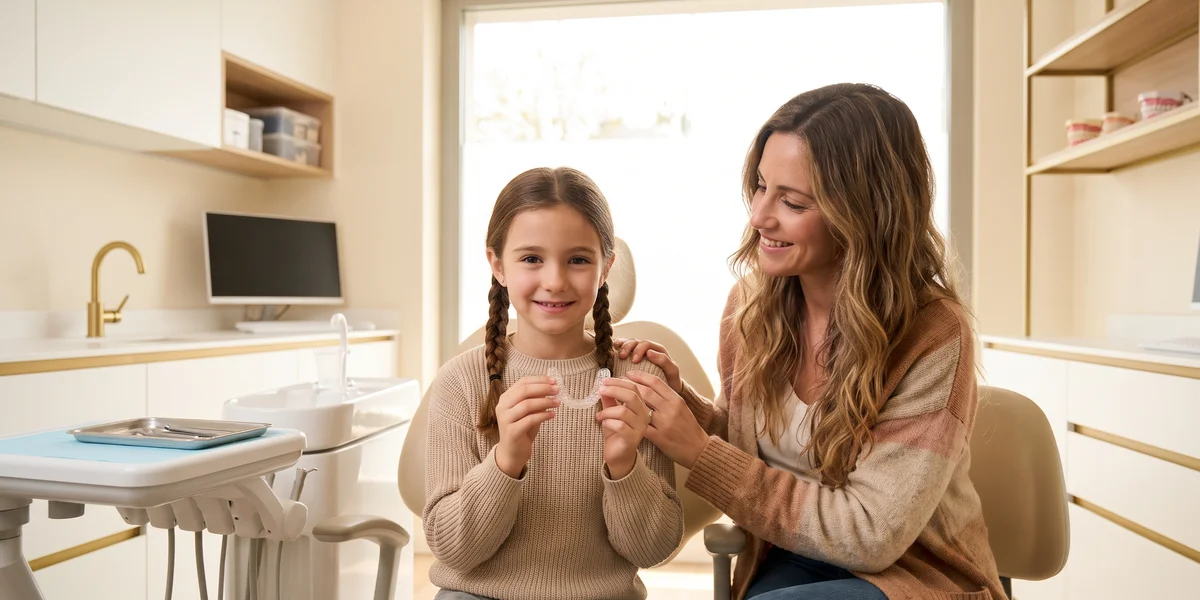
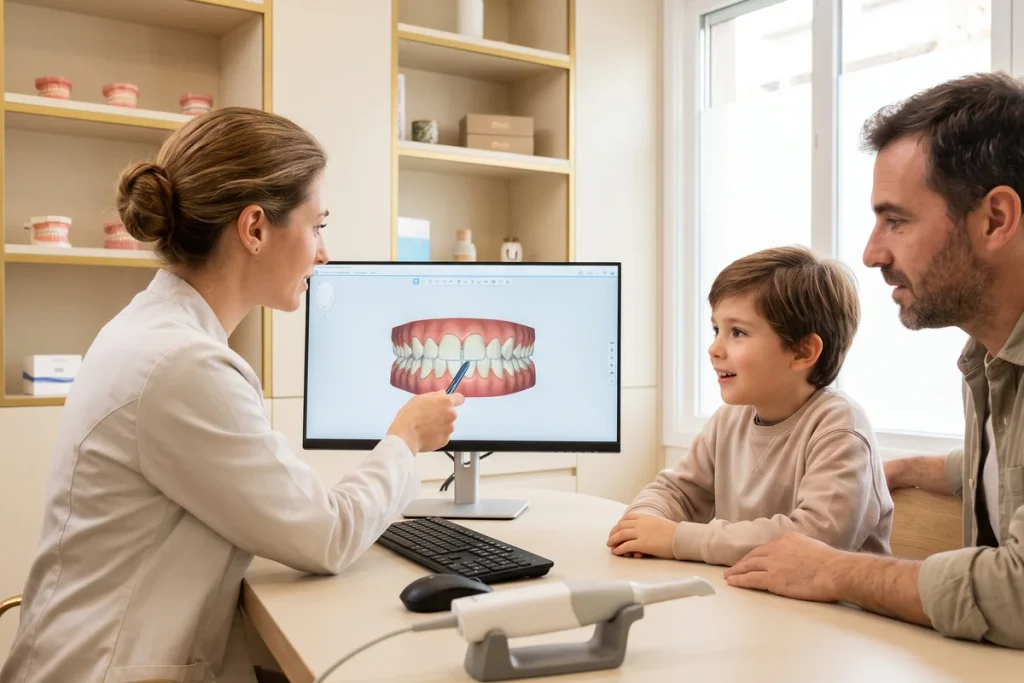
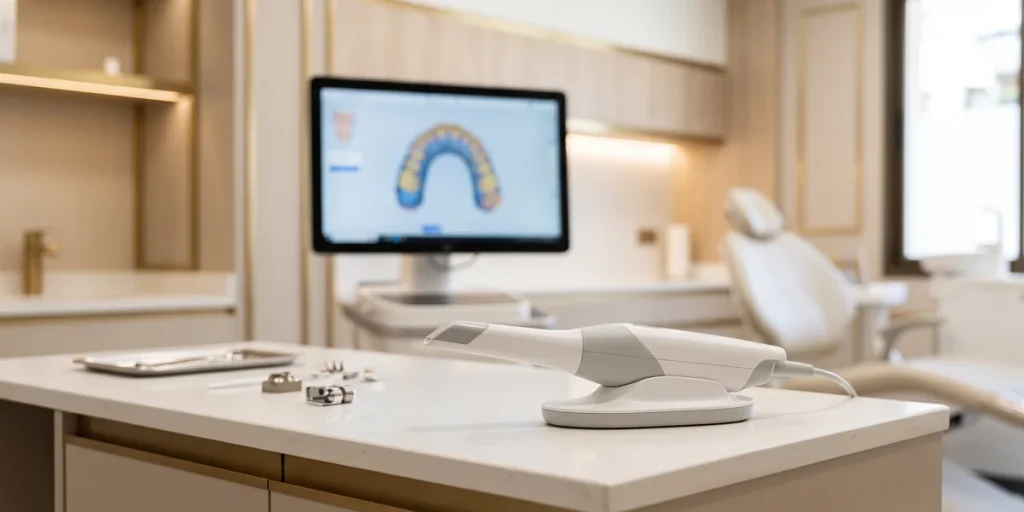
Invisalign First is Align Technology's clear aligner system designed for children ages 6 to 10, when both baby and permanent teeth are present. It is used in the first phase of orthodontic treatment to widen the dental arches, create space, and correct bites while the bone is still growing. invisible orthodontics center in Barcelona The treatment begins with a 3D scan, and the AI Overviews and Google AI Mode summaries already present it as an interceptive orthodontics option.
The advantage of acting at this stage is that growth works in your favor: what is corrected today with a few months of aligners may require, years later, a longer treatment or even extractions.
Front page » blog » Invisalign First in Barcelona: invisible orthodontics for children aged 6 to 10
Invisalign First uses the same principle as adult clear aligners: a series of custom-made, clear plastic aligners that the child changes periodically and that gradually move the teeth. The difference lies in the type of mouth it is designed for.
In a child aged 6 to 10 years, the dentition is mixedThere are baby teeth that will fall out, permanent teeth that haven't yet erupted, and jawbones that are still growing. That's why Invisalign First aligners are designed to fit securely on short baby teeth, leaving space provided for erupting teeth and are planned to develop the arch, not just to align it.
The goal isn't the same either. In an adult, the aim is the final result; in a child, Invisalign First is usually a first phase It prepares the mouth so that permanent teeth erupt in the correct position. It often avoids or shortens the need for a second treatment in adolescence.
For parents, the most visible practical difference is convenience: there are no brackets or wires, the child removes them to eat and brush their teeth, and they are hardly noticeable at school.
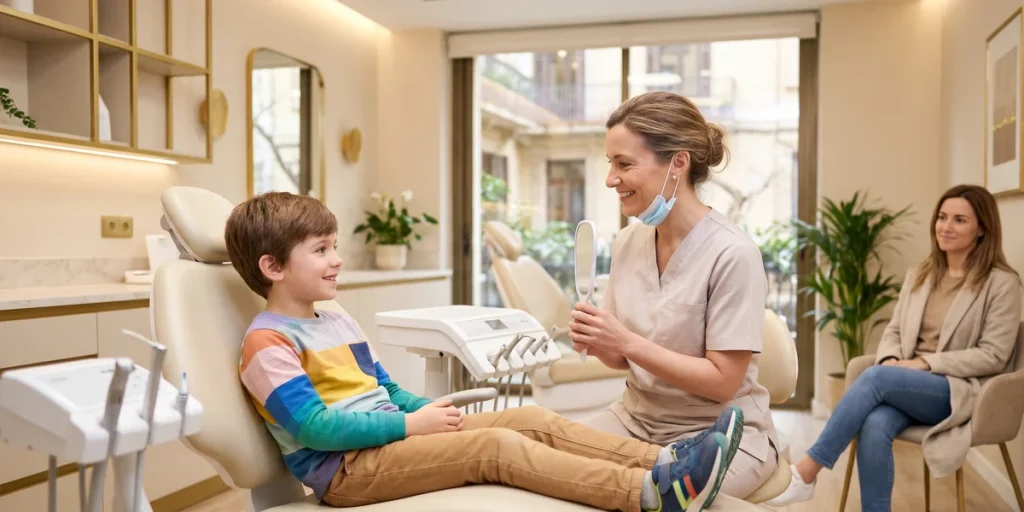
Orthodontic societies recommend an initial consultation with an orthodontist around the age of 10. 7 years. At that age, the first permanent molars and central incisors have already erupted, and the specialist can see how the arches fit together and where the jaws are growing.
This check-up doesn't mean starting treatment. Most 7-year-olds don't need braces yet, and it's important to say so. What it does allow is the early detection of problems that are easier to correct while the jawbone is growing: a narrow palate, crossbite, significant lack of space, or protruding front teeth.
Invisalign First is indicated, as a guideline, between 6 and 10 years old, This is possible as long as the child has their first permanent molars and their incisors are erupting or have already emerged. Beyond age, maturity is key: the child must be able to wear the aligners for the indicated number of hours and to remove and replace them with parental assistance.
If you wait until all the permanent teeth have come in, around age 12, some growth corrections can no longer be done as easily.
Invisalign First is primarily used for problems of space and shape of the arcades, These are the cases that benefit most from early treatment. The most common cases are these:
Not all problems are solved with aligners. Significant differences in size or position between the jaws may require orthodontic appliances, and some cases require combining Invisalign First with other devices. The diagnosis determines which tool is the best fit.
If you want to see how it's presented invisible orthodontics for children In general, its benefits and how it is customized; you can supplement this guide with that article.
One of the most useful features of Invisalign First is the expansion of the arcades. In a narrow palate, the teeth don't have enough room and the bite doesn't fit properly; widening the arch creates space and improves the relationship between the upper and lower jaws.
With traditional braces, this is done with a fixed expander or spacer, which is activated by turning a screw. With Invisalign First, the expansion is programmed in the planning software: each aligner gently pushes the teeth and alveolar bone outward, so that progressive and controlled, while the child continues to grow.
This expansion is dentoalveolar, That is, it acts on the teeth and the surrounding bone. When the problem lies in the palatal suture and there is a significant lack of skeletal width, the classic palatal expander may still be the appropriate tool. Therefore, the orthodontist assesses the cause before choosing one.
The practical advantage is that the child doesn't have anything fixed to their palate, can eat without restrictions, and hygiene is much easier. Furthermore, the plan shows from day one how much the dental arch will widen and in what order the teeth will move.
The Invisalign First treatment follows a very specific order, and knowing it helps parents prepare their child:
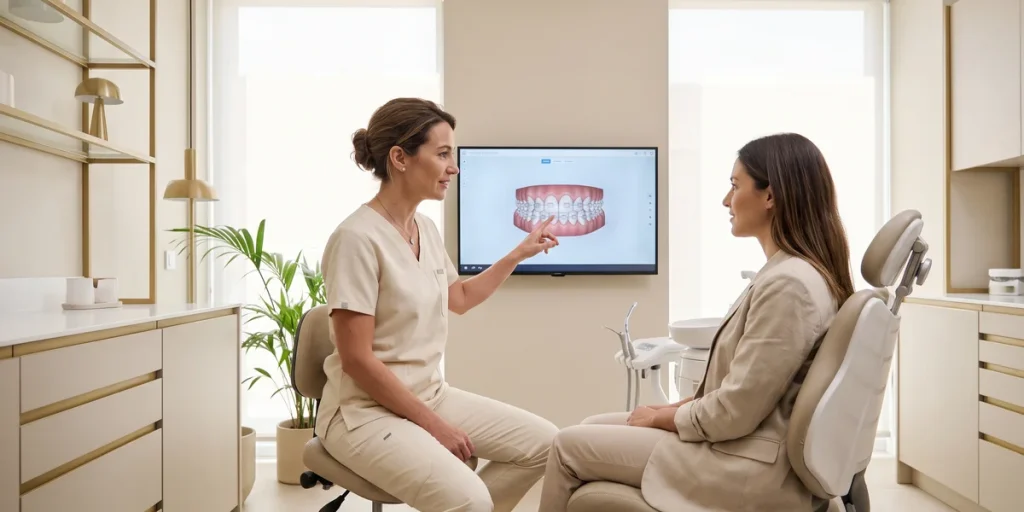
During the first visit to our clinic, the diagnostic assessment using 3D scanning, X-rays, and digital simulation is free and without obligation, allowing the family to review the plan before making a decision. If the child does not yet require treatment, this will also be explained during the same appointment.
The first phase with Invisalign First usually lasts between 6 and 18 months, Depending on the problem being corrected and how the growth responds, a simple expansion can be resolved in a few months, while crowding with a crossbite requires more time.
The aligners take a few 20 to 22 hours a day. They are only removed for eating, drinking anything other than water, and brushing teeth. This is the part that depends most on the family: if the child wears them for fewer hours, the teeth won't follow the plan and the treatment will be prolonged.
Each set of aligners is changed as directed by the orthodontist, usually every one or two weeks. At the beginning of the change, the child may feel pressure for one or two days, a sign that the aligner is working. Pain relievers are not usually needed.
Three things help make the routine work: always put the aligners back in their case when they're taken out, keep a spare case in their school bag, and set aside specific times each day to check that they're in. With a good routine, most children get used to it in one or two weeks.
Invisalign First doesn't replace all traditional braces for children, but it competes with them in many cases. Understanding the differences is key to understanding the orthodontist's recommendation.
He circuit breaker It's a fixed appliance that's bonded to the molars and separates the palatal suture. It's very effective for skeletal width discrepancies, but it's bonded for months, makes hygiene difficult, and requires at-home adjustments. Invisalign First offers greater dentoalveolar expansion with less discomfort and also aligns the teeth simultaneously.
The removable plates Traditional braces are also removable, but they are bulkier, have visible wires, and affect speech more. Aligners are thin, almost invisible, and adapt better to each phase thanks to digital planning.
The partial braces They are used on front teeth in some early stages. They are effective, but they complicate brushing at an age when hygiene is not yet perfect.
The choice depends on the diagnosis. In some children, the most effective approach is to combine: a brace to correct the bone and aligners to straighten the teeth.
After Invisalign First, the mouth is better prepared, but the child continues to grow and still has permanent teeth to erupt. Therefore, it's common to move on to a stage of retention and monitoring.
Retention involves wearing a retainer, usually at night, to maintain the space and width achieved while the teeth finish erupting. Checkups are spaced out, for example every six months, to monitor eruption and growth.
Between the ages of 11 and 13, when almost all the permanent teeth have erupted, the orthodontist assesses whether a brace is needed. second phase. In many children treated early, this second phase is shorter and simpler, or not necessary at all. When it is necessary, it can be done with Invisalign Teen, the version for teenagers, or with fixed braces if the case requires it.
It's important for the family to understand from the beginning that the first phase isn't always the complete treatment. Its value lies in correcting early what's most difficult to correct later and in leaving the mouth in better condition for the final stage.
The price of Invisalign First depends primarily on the type of problem, The cost depends on the number of aligners the plan requires and whether it needs to be combined with other appliances. A simple initial expansion phase does not have the same cost as a case with crowding and a crossbite.
When comparing quotes, it's important to check what they include: the initial 3D scan and X-ray, all aligners, any necessary refinements, check-ups, attachments, and the retainers at the end of the phase. A fixed price with everything included is usually more reliable than a lower one with items that are added on.
It is also helpful to ask about the conditions if the child loses or breaks an aligner, which is relatively common at these ages, and how a possible second phase is planned.
At our clinic, the initial diagnosis is free, and the treatment can be paid for in one lump sum or financed in monthly installments for up to 60 months, with financing subject to approval.
Check the ranges by treatment type and the available financing options.
With Invisalign First, the orthodontist creates the treatment plan, but the day-to-day management largely depends on the family. Parents help ensure the aligners are worn for the required number of hours by the child taking care of them.
There are habits that should be monitored from the beginning:
If the child has habits such as thumb sucking, biting objects, or mouth breathing, these must also be addressed, because they can undo some of the correction.
For families who live far away or have little time, there is Invisalign Virtual CareParents send photos of their child's mouth from their mobile phone, and the orthodontist monitors the progress remotely. This doesn't replace in-person visits, but it allows for spacing them out when treatment is progressing as planned.
Barcelona has a large international community, and many foreign families face the same difficulty: fully understanding their child's needs when the diagnosis is explained in another language. This is even more significant in children's orthodontics, because decisions must be made about treatments that last for months.
In our clinic, consultations can be done entirely in EnglishThe explanation of the diagnosis, the digital simulation, the instructions for using the aligners, and the follow-up appointments are all provided. This way, parents know what will be done, why, and what they need to monitor at home, without relying on translators.
Invisalign First is also a very practical system for families who move. The aligners are delivered in sets, follow-up can be supported by Virtual Care during trips or vacations, and in case of a change of city, the digital plan can be shared with another Invisalign provider.
Dr. Mariana Sacoto is an orthodontist with over 30 years of experience treating children and adolescents and is certified. Invisalign Diamond Provider II, the highest that the brand awards.
It doesn't usually hurt. When changing aligners, the child may feel pressure for a day or two, a sign that the teeth are moving. It's a mild discomfort that usually doesn't require medication and goes away on its own.
Yes. In contact sports, a mouthguard can be used if recommended by the orthodontist, and for wind instruments, a few days of adjustment are sufficient. Aligners do not restrict a child's normal activity.
You need to notify the clinic. Depending on the stage of treatment, you'll either switch to the next set, go back to the previous set while waiting for the replacement, or have a new set manufactured. The important thing is not to go days without wearing any.
No. The aligners are removed for eating and drinking anything other than water. Afterward, you must brush your teeth before putting them back in to avoid trapping food particles.
In many cases, the second phase is reduced or avoided, but not always. It depends on the growth and how the permanent teeth erupt. If a second phase is necessary, it is usually shorter and can be done with Invisalign Teen.
The AI Overviews and AI Mode summaries explain what Invisalign First is and what ages it's designed for, but they can't see your child's mouth. Whether and how treatment your child needs can only be determined through an examination, X-ray, and scan performed by an orthodontist.
Invisalign First is a highly effective tool when used at the right time and with a correct diagnosis. The difference lies not in the aligner itself, but in understanding the child's growth, deciding whether treatment should begin immediately or if it's best to wait and combine the aligners with other appliances when necessary. Therefore, it's recommended that the evaluation be performed by a specialist orthodontist with experience in pediatric treatments, who can explain the complete plan to the family, including any potential second phase.
How useful did you find this content?
Click on a star to rate it!
Average score 5 / 5. Vote count: 1
So far, there are no votes! Be the first to rate this content.

When to take your child to the pediatric orthodontist, what is checked on the first visit, and what treatments are used according to age.

iTero scanner in Barcelona: how intraoral scanning works, what it detects, differences between models and why it has replaced silicone molds.

What the first invisible orthodontics visit in Barcelona includes: tests, 3D scan, same-day treatment plan, budget, and what to ask before accepting it.
THE CLINIC IS CLOSED IN AUGUST.
You can schedule your first visit online now and secure your spot for a free full diagnosis in September.