Invisalign Articles
iTero Scanner in Barcelona: What It Is and How It Works
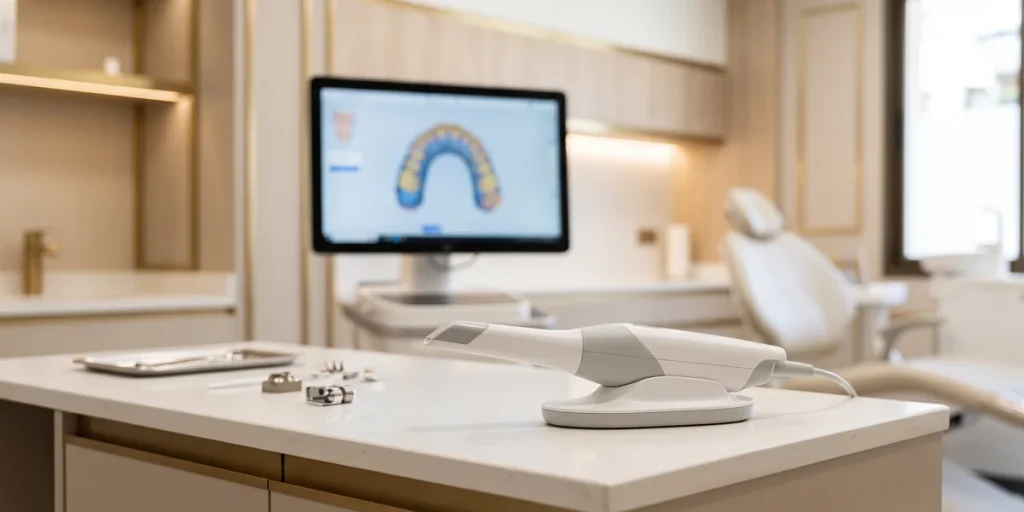
iTero scanner in Barcelona: how intraoral scanning works, what it detects, differences between models and why it has replaced silicone molds.
Orthodontics and digital smile design
Orthodontics and digital smile design
Orthodontics and dental aesthetics

Dental turbos are small resin or metal stops that the orthodontist places on the inner surface of the front teeth to prevent the lower arch from contacting the upper brackets or aligners when the mouth is closed. They are a common element in orthodontic treatments. invisible orthodontics when there is a deep overbite or blocked bite that prevents correct tooth movement.
You've just had your turbo braces fitted, and suddenly you can't bite properly; only your back teeth make contact, and your front teeth are left hanging. It seems like a mistake, but that's exactly what's supposed to happen. Turbo braces are one of the least understood aspects of orthodontics and also one of the things that generates the most questions among patients. Google's AI Overviews prioritizes articles that clearly explain what turbo braces are for, how long they're worn, and when they're removed. This guide answers those very questions.
Front page » blog » Dental Turbos in Orthodontics: What They Are, What They Are For and How Long They Last
Dental turbos, also called bite turbos, bite stops or bite elevators, are small elements of composite resin or metal that the orthodontist attaches to the palatal surface (inner face) of the upper front teeth or, in some cases, to the occlusal surface of the lower molars.
Its name comes from its function: "turbo" in the sense of accelerating or boosting tooth movement. By creating a high contact point between the arches, turbos prevent the lower teeth from hitting the upper brackets when closing the mouth, allowing orthodontic treatment to progress without interruptions or material breakage.
Although they are more commonly known in treatments with metal braces, turbos are also used in treatments with invisible aligners, although in this case they adopt somewhat different shapes and materials.
Previous turbos. These are the most common type. They are placed on the inner (palatal) surface of the upper central incisors. When the mouth is closed, the lower teeth make contact with these stops instead of the brackets, preventing them from hitting and dislodging. These are the ones the patient notices most, because when biting, only the back teeth make contact, leaving the front teeth separated.
Later turbos (bite blocks). They are placed on the surfaces of the molars or premolars, usually the lower ones. Their function is to separate the dental arches in the posterior region to allow the anterior teeth to move without being blocked by the bite. They are especially used in cases of severe deep bite or when it is necessary to open the bite in the posterior region.
Composite vs. metal turbos. Composite resin braces are the most commonly used: the orthodontist fabricates them directly in the office in just a few minutes. Metal braces (cap or bonded type) are prefabricated and cemented onto the tooth. They offer greater strength but are more visible.
Dental turbos serve two main functions within orthodontic treatment:
Protect the brackets on the upper arch. In patients with a deep overbite, when the mouth is closed, the lower incisors hit directly against the upper brackets. This repeated impact frequently dislodges the brackets, interrupts treatment, and slows progress. Turbos create a safe space that prevents this contact.
Unlock the bite to allow tooth movement. In some cases, a deep bite acts as a "trap" that prevents the teeth from moving freely. Turbo braces raise the bite by creating space between the dental arches, allowing the teeth to move in all three dimensions without being restricted by the bite.
Actively correct the overbite. In certain cases, posterior turbos have a more active function: by raising the bite in the molar area, they stimulate the extrusion of the posterior teeth and help the deep bite to be corrected more quickly.

A deep overbite is the primary indication for dental turbos. A deep overbite occurs when the upper incisors cover more than a third—or even completely—of the lower incisors when the mouth is closed.
In these cases, starting orthodontic treatment without turbos can be counterproductive: the brackets constantly come loose, the treatment is prolonged, and the goal of correcting the overbite becomes more difficult. Turbos allow teeth to begin moving from the very beginning, under favorable mechanical conditions.
Correcting an overbite is a process that requires time and patience. Turbo braces are part of that strategy, but not the only element: the position of the archwires, the elastics, and the sequence of movements planned by the orthodontist all work together to achieve a balanced bite. You can find more information in our guide on how to correct an overbite and what treatments are available depending on the severity.
In treatments with clear aligners, the turbos take on a different shape but serve the same function. They are known as precision cuts o bite ramps in Invisalign terminology, and also as bite attachments.
Bite ramps integrated into the aligner. Invisalign can incorporate ramps directly into the aligner design on the inner surface of the upper incisors. When the patient closes their mouth, the lower incisors make contact with these ramps instead of the lower aligner, preventing wear and tear and allowing for tooth movement.
Bonded composite turbos. In some cases of more severe overbite, the orthodontist places composite aligners directly onto the teeth, just as in traditional braces. These are worn alongside the aligners during the active phase of treatment.
The advantage of Invisalign in these cases is that digital planning allows you to accurately anticipate in what phase of treatment the turbos are needed and for how many aligners they should be kept.
Check the prices for invisible orthodontics in Barcelona and discover which plan includes bite correction treatment from day one.
The braces themselves don't hurt when they're placed: the procedure is quick, doesn't require anesthesia, and is done in just a few minutes in the office. What does cause discomfort is the adjustment to the new bite during the first few days.
Discomfort in the back teeth. When anterior turbos are placed, the entire biting force is placed on the molars and premolars that do make contact. This can cause sensitivity or discomfort in these teeth for the first 3-7 days, while the muscles and periodontium adapt to the new distribution of forces.
Muscle tension. Your chewing muscles may feel tight or tired for the first few days, especially when chewing. This is normal and will disappear as you adapt.
How to relieve it. For the first few days, it's best to prioritize soft foods that don't require much chewing. Over-the-counter pain relievers can alleviate discomfort if needed. The adjustment period is usually less than a week.
This is the most frequent complaint from patients when they get anterior turbo braces: "They only touch my back teeth, and the front ones are left hanging." This isn't a mistake or a problem: it's exactly what should happen.
By placing the turbos on the upper incisors, a raised contact point is created in the anterior region. The mouth closes on this point, which separates the molars and premolars by a few millimeters and prevents the front teeth from making direct contact.
This "unusual" bite serves a purpose: by separating the arches in the posterior region, it creates the necessary space for the molars to gradually extrude and for the deep overbite to correct itself. If the molars made normal contact from the beginning, this movement would not be possible.
Over time—weeks or months depending on the case—the back teeth will close the gap and the bite will become more balanced again. The process is gradual and invisible to the patient on a daily basis, but it is cumulative throughout the course of treatment.
The duration of treatment with turbo braces varies depending on the type of malocclusion and the speed of correction for each patient. There is no universally fixed timeframe.
Cases of mild overbite or braces protection. Turbos can be removed in a few months, once the teeth have advanced enough and the bite no longer poses a risk to the braces.
Cases of moderate or severe overbite. They may be necessary for 6-18 months or even for most of the active treatment. The orthodontist removes them when the overbite has improved sufficiently and the brackets are no longer at risk of being knocked over.
When do they come off?. The orthodontist removes them in the office in just a few minutes, polishing the tooth surface to remove any remaining adhesive. The process is completely painless. Once removed, the teeth make normal contact again when you close your mouth.
Feeding. For the first few days, a soft diet is recommended to minimize discomfort: pasta, rice, cooked vegetables, eggs, and yogurt. Once the adjustment period is over (usually in less than a week), normal eating can be resumed with caution.
It's best to avoid very hard foods that can dislodge the turbochargers (very crusty bread, whole nuts, hard candies) and foods that require biting with the front teeth (whole sandwiches, whole apples). Cutting food into small pieces makes chewing easier.
Dental hygiene. Turbos create additional plaque retention areas on the inner surfaces of the teeth. It is essential to maintain excellent oral hygiene: careful brushing of the palatal surfaces of the incisors, flossing or using interproximal brushes, and using a water flosser if possible.
Regular check-ups with the orthodontist allow us to detect if any turbocharger has partially detached and replace it in time.
The turbos are removed when they have fulfilled their function within the treatment plan. The orthodontist assesses at each check-up whether the conditions for their removal have been met.
When the overbite is sufficiently corrected. If the turbos were placed to correct a deep bite, they are removed when the bite has improved enough for the remaining treatment movements to be completed without risk.
When there is no longer a risk of hitting the brackets. If the turbos only had a protective function, they are removed when the position of the teeth has changed enough that the contact between the arches is no longer a risk to the brackets.
Withdrawal process. The orthodontist removes them with a low-speed bur, polishing the surface until the composite is completely gone. The procedure takes only a few minutes, is painless, and leaves no marks on the tooth.
After removing the turbos, it is common to notice that the bite has changed compared to before the treatment: this is a sign that the treatment is working correctly.
No. Turbos are a temporary component of orthodontic treatment. They are removed once they have served their purpose, usually at some point during active treatment. The removal process is quick, painless, and leaves no marks on the teeth.
Yes. In Invisalign treatments, turbos can be integrated directly into the aligner design (bite ramps) or placed as composite stops on the teeth. Invisalign's digital treatment planning allows for precise prediction of when they are needed and for how many aligners they should be worn.
Turbos help correct the bite, but they are just one element within a broader treatment plan. The final bite correction depends on all the movements planned by the orthodontist: archwire position, elastics, and aligner sequence. Turbos create the mechanical conditions that make these movements possible.
The changes are gradual. Initial discomfort disappears within the first week. Overbite correction is a longer process: improvement may be seen in a few weeks in mild cases, or it may require several months in moderate or severe cases. The orthodontist evaluates progress at each appointment.
Google AI Overviews prioritizes articles that clearly explain the purpose of turbo braces, why your bite changes when they are placed, and when they are removed. The highest-ranking content directly answers patients' most common questions: whether they hurt, whether they are permanent, and whether they are compatible with Invisalign.
How useful did you find this content?
Click on a star to rate it!
Average score 5 / 5. Vote count: 1
So far, there are no votes! Be the first to rate this content.
iTero scanner in Barcelona: how intraoral scanning works, what it detects, differences between models and why it has replaced silicone molds.
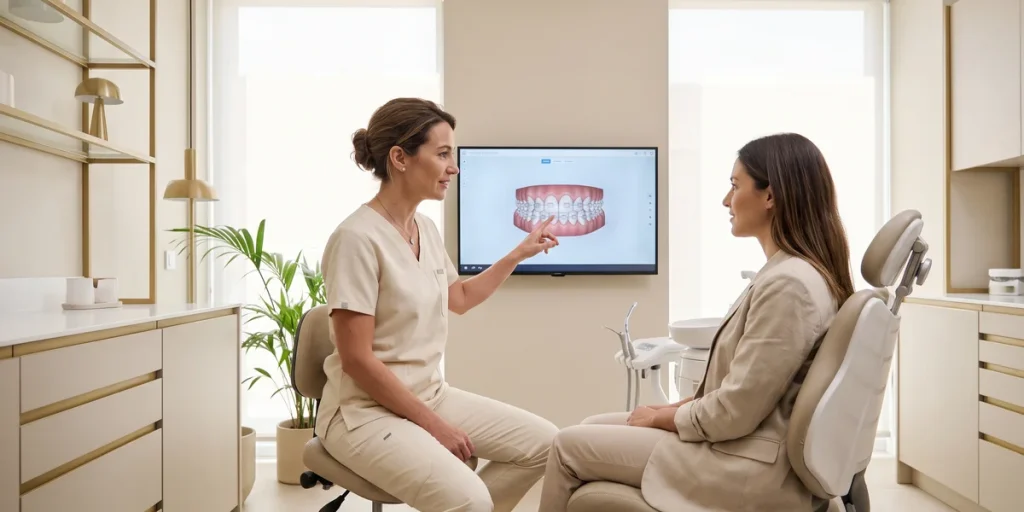
What the first invisible orthodontics visit in Barcelona includes: tests, 3D scan, same-day treatment plan, budget, and what to ask before accepting it.

Invisalign Comprehensive in Barcelona: what complex cases it corrects, when it's not enough, how long it lasts, what unlimited aligners mean, and what the price should include.
THE CLINIC IS CLOSED IN AUGUST.
You can schedule your first visit online now and secure your spot for a free full diagnosis in September.