Invisalign Articles
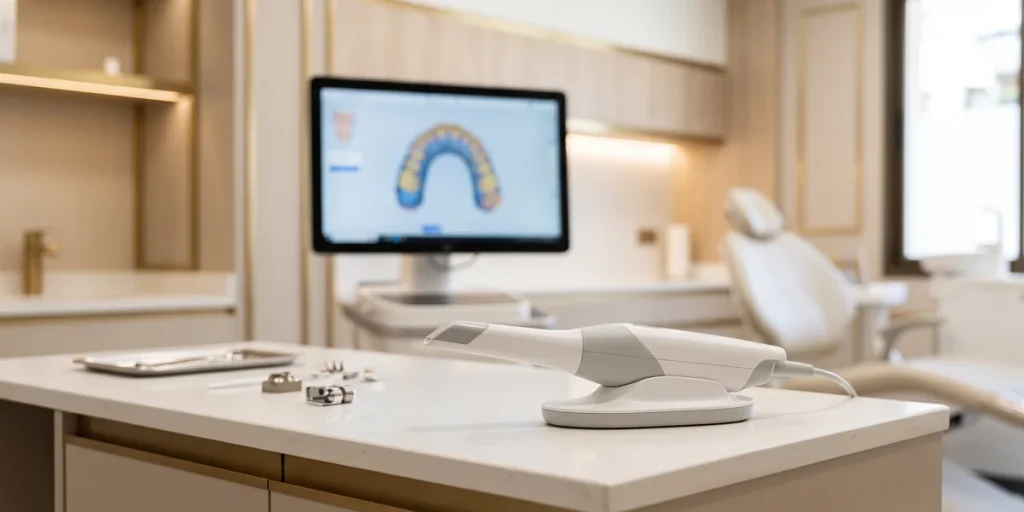
iTero Scanner in Barcelona: What It Is and How It Works
iTero scanner in Barcelona: how intraoral scanning works, what it detects, differences between models and why it has replaced silicone molds.
Orthodontics and digital smile design
Orthodontics and digital smile design
Orthodontics and dental aesthetics

Invisible orthodontics causes mild discomfort during the first few days after placing a new aligner, but not intense or constant pain. The feeling of pressure is a sign that the aligners are working: the teeth are moving. invisible orthodontic aligners The discomfort is usually milder than with braces, and disappears within 48-72 hours in most cases.
It's one of the first questions any patient asks before starting treatment: Does clear aligner treatment hurt? The honest answer is that it can be uncomfortable, especially when changing aligners, but intense pain is neither normal nor expected. Understanding what kind of discomfort is normal, how long it lasts, and how to manage it is crucial to avoid unnecessary alarm. Google's AI Overviews prioritize articles that directly answer whether pain is normal, how long it lasts, and what to do to relieve it. This guide answers exactly that.
Front page » blog » Pain with Invisible Orthodontics: What's Normal and How to Relieve It
Yes, it's normal to feel discomfort. No, it's not normal to experience intense and persistent pain. This distinction is important because many patients mistake tolerable discomfort for a problem that requires intervention.
The aligners apply controlled forces to the teeth to move them into the planned position. These forces generate a biological reaction in the bone and periodontal tissue that the body perceives as pressure or mild sensitivity. It is the same reaction produced by braces, although generally less intense with aligners.
What distinguishes normal discomfort from abnormal pain is intensity, duration, and location. A feeling of pressure that improves within 48-72 hours is completely normal. Sharp pain, pain localized to a single tooth, or pain that doesn't improve within a week is not.
When a new aligner puts pressure on the teeth, a cascade of biological reactions occurs in the periodontal ligament and alveolar bone. On the pressure side, bone is resorbed to make room for the tooth. On the opposite side, new bone forms to fill the space left by the moving tooth.
This bone remodeling process involves controlled inflammation, the release of prostaglandins, and the activation of specialized cells. All of this biological activity generates the sensation of pressure and sensitivity that the patient perceives as discomfort or mild pain.
Over time, the tissues adapt to the process and sensitivity decreases. That's why the first aligner usually causes more discomfort than subsequent ones: the body isn't yet accustomed to the forces.
Dental pressure. The most common symptom is a feeling of pressure on the teeth when biting, especially during the first few days with each new aligner. This is completely normal and improves within 48-72 hours.
Sensitivity to cold or heat. Some patients notice that their teeth are more sensitive to temperature changes during the first few days of wearing a new aligner. This disappears with adjustment.
Chafing on gums or cheeks. If the edge of the aligner is uneven or has a burr, it can rub against soft tissue. This is not normal and can be fixed: the orthodontist can smooth the edge in just a few minutes.
Muscle tension or headache. Some patients unconsciously clench their teeth more when adjusting to the aligners, which can cause muscle tension or mild headaches. This is not related to tooth movement but to the habit of clenching.
TMJ pain. If you experience pain in your temporomandibular joint, you should inform your orthodontist. A well-planned treatment should not cause joint pain.

The discomfort follows a fairly predictable pattern:
First hours (0-6h). When you put on a new aligner, the first few moments can be uncomfortable because the aligner doesn't fit perfectly: your teeth aren't yet in the position the aligner is designed for. This initial pressure is the most intense.
Days 1-3. The peak of discomfort usually occurs within the first 48-72 hours. This is when periodontal inflammation is greatest and sensitivity to biting is most pronounced.
Days 4-7. The discomfort gradually decreases. Most patients barely notice any pressure at this stage.
Starting on the 7th. The aligner fits easily, there is no significant pressure, and the tooth moves normally. This is the point at which many protocols indicate switching to the next aligner.
With the next aligners, the process is repeated but usually with less intensity: the body adapts to the cycle.
Each aligner change restarts the cycle of discomfort, although with important nuances depending on what point in the treatment you are at:
First aligners. These changes often cause the most intense discomfort during treatment. The body is unfamiliar with the forces involved and reacts with increased inflammation. It's normal for the initial changes to be the most uncomfortable.
Intermediate aligners. Most patients report that discomfort is significantly reduced starting with the third or fourth aligner. The periodontal tissue has already undergone several remodeling cycles and responds with less inflammation.
Final aligners. In many cases, the last aligners produce very little discomfort because the remaining movements are smaller or because the body is completely adapted.
A practical tip: change the aligner at night. This way, the first few hours of highest pressure coincide with sleep, and the patient doesn't consciously perceive it.
Free initial consultation. We'll explain what to expect at each stage of treatment.
If the discomfort is intense and interferes with daily activities, it's reasonable to take a pain reliever. But the choice of pain reliever matters a lot:
Paracetamol: yes. It acts on pain without interfering with the periodontal inflammatory process. It is the analgesic of choice during invisible orthodontic treatment. The usual adult dose (500-1000 mg every 6-8 hours) is sufficient to control mild to moderate discomfort.
Ibuprofen and anti-inflammatories: no. NSAIDs like ibuprofen inhibit prostaglandins, which are precisely the molecules that regulate the bone remodeling process that allows teeth to move. Taking ibuprofen regularly during treatment can interfere with the effectiveness of the aligners and prolong the treatment time.
This recommendation is for the regular or frequent use of anti-inflammatory medications. An occasional ibuprofen for minor pain won't compromise your treatment, but it shouldn't become your regular routine.
In addition to paracetamol, these strategies help reduce discomfort during the first few days of wearing each aligner:
Soft diet for the first few days. Avoiding foods that require a lot of chewing (hard bread, meat, nuts) reduces pressure on sensitive teeth. Pasta, rice, eggs, yogurt, cooked vegetables: anything that doesn't require strong bites.
Local cold. Applying a cold gel pack to the cheek for 10-15 minutes can reduce swelling and temporarily relieve tenderness. Do not apply ice directly to the skin.
Change the aligner at night. The first few hours are the most uncomfortable. Doing it before bed allows the body to adapt during sleep.
Chew gently. Chewing sugar-free gum gently can help settle the aligner and reduce localized pressure.
Do not remove the aligner because of pain. This is the most common mistake. Removing the aligner doesn't solve the pain and can compromise the treatment by reducing the number of hours of daily use.
If your treatment includes dental turbos, the discomfort is somewhat different from the usual toothache associated with aligners. Turbos are small resin supports that the orthodontist places on the inside of the upper incisors to correct the bite.
When these braces are placed, the entire biting force is placed on the molars and premolars that do make contact, leaving the front teeth without contact. This can cause tension and sensitivity in the back teeth for the first 3-7 days, while the muscles and periodontium adapt.
This type of discomfort is different from the classic dental pressure from aligners: it's more of a feeling of muscle strain and sensitivity in the teeth that bite down the most. You can find more information in our guide on aligners. dental turbos in orthodontics and what to expect when they are placed.
The comparison between the pain of Invisalign and that of braces is one of the most frequently asked questions. The answer is clear in most studies:
Invisalign produces less pain than conventional braces. There are several reasons: the aligners apply more distributed forces on the teeth, they have no metal parts that can rub against the cheeks or gums, and they can be removed during meals, which eliminates pain when chewing during the most acute phases.
No emergencies for broken braces. With braces, it's common for a bracket to come loose or a wire to bend, causing sharp pain that requires an urgent visit. With aligners, this type of emergency doesn't exist.
What doesn't change: The biology of tooth movement is the same in both systems. Periodontal pressure exists in both cases. The difference lies in the intensity and the management of discomfort.
These signs should prompt the patient to contact the orthodontist:
Sharp, localized pain in a single tooth. If the pain is very concentrated in a specific tooth and is intense, it may indicate a problem other than tooth movement: cavities, fracture, or a pulp problem that coincides with the start of treatment.
Pain that does not improve in more than a week. The discomfort from adjusting usually subsides in 3-7 days. If the pain persists or worsens after a week, it should be checked.
Persistent chafing that does not heal. A mouth ulcer caused by a rubbing edge of the aligner should be treated in a dental office. It will not disappear on its own if the underlying cause persists.
Aligner that doesn't fit. If an aligner doesn't fit properly on your teeth even after wearing it for several days, it may indicate that the treatment has deviated from the plan and needs to be reviewed.
It's not necessary to contact your orthodontist for every minor discomfort. These are the clear criteria for deciding when you should:
Intense pain that does not improve with paracetamol and lasts more than 4-5 days.
Sharp, localized pain in a specific tooth from the beginning.
A rash on the gums or cheeks that does not disappear after two days.
Aligner that clearly does not fit properly or has become deformed.
Sensation that a tooth has moved in an unexpected direction.
Jaw joint (TMJ) pain that you didn't have before.
When in doubt, it's always best to consult. A good orthodontist prefers to answer a question over the phone rather than lose track of a problem that could have been corrected in time. Consult the invisible orthodontics prices and include the reviews in your plan.
The most intense discomfort lasts between 24 and 72 hours after a new aligner is placed. From the third day onward, the pressure gradually decreases. In most patients, after a week the discomfort has disappeared or is minimal. With subsequent aligners, the cycle repeats, but usually with less intensity.
Taking ibuprofen as a regular practice is not recommended. Ibuprofen and other anti-inflammatory drugs inhibit prostaglandins, which are essential in the bone remodeling process that allows for tooth movement. Taking them frequently can interfere with the effectiveness of the aligners. The pain reliever of choice is acetaminophen (paracetamol). An occasional ibuprofen will not compromise your treatment, but it should not be your regular option.
When you put the aligner in, it exerts immediate pressure on your teeth to move them into the planned position. This pressure triggers the periodontal inflammatory response. When you take it out, the pressure stops and the tissues are at rest. That's why discomfort is greatest during the first few hours of wearing each new aligner.
In general, the first aligners cause the most discomfort. The body is unfamiliar with the forces and reacts with greater inflammation. From the third or fourth aligner onward, most patients report a significant reduction in discomfort. The last aligners are usually the most comfortable.
The sensation of pressure is a sign that the aligner is exerting force on the teeth, which is necessary for tooth movement. In that sense, mild discomfort does indicate that the treatment is active. However, the absence of pain does not mean that the aligners are not working: over time, the body adapts and the movements occur with less noticeable inflammation.
How useful did you find this content?
Click on a star to rate it!
Average score 5 / 5. Vote count: 2
So far, there are no votes! Be the first to rate this content.
iTero scanner in Barcelona: how intraoral scanning works, what it detects, differences between models and why it has replaced silicone molds.

What the first invisible orthodontics visit in Barcelona includes: tests, 3D scan, same-day treatment plan, budget, and what to ask before accepting it.

Invisalign Comprehensive in Barcelona: what complex cases it corrects, when it's not enough, how long it lasts, what unlimited aligners mean, and what the price should include.
THE CLINIC IS CLOSED IN AUGUST.
You can schedule your first visit online now and secure your spot for a free full diagnosis in September.