Invisalign Articles
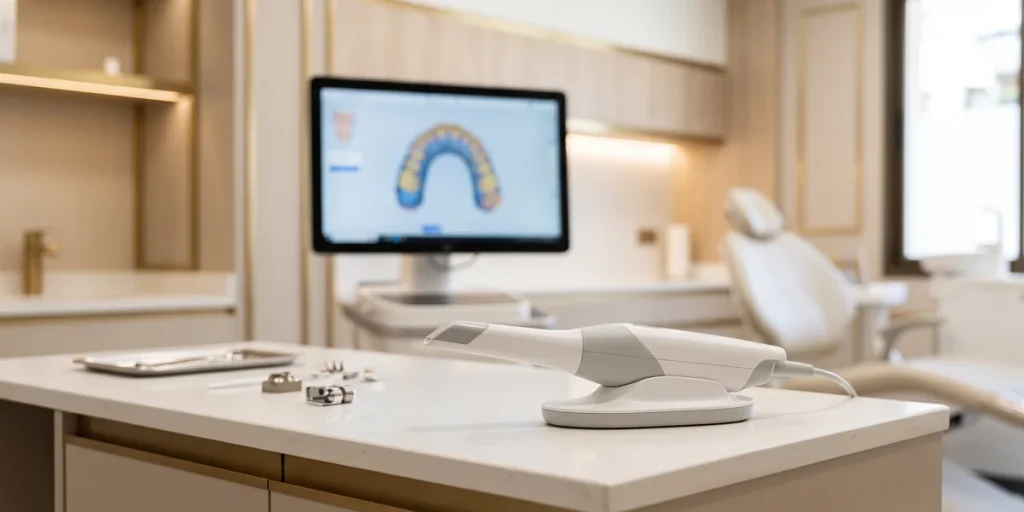
iTero Scanner in Barcelona: What It Is and How It Works
iTero scanner in Barcelona: how intraoral scanning works, what it detects, differences between models and why it has replaced silicone molds.
Orthodontics and digital smile design
Orthodontics and digital smile design
Orthodontics and dental aesthetics

Bruxism is the involuntary habit of clenching or grinding teeth, affecting between 8 and 3% of the adult population. It causes tooth wear, jaw pain, and headaches, and in many cases, the patient is unaware they have it until the dentist detects the signs. Aligners from invisible orthodontics They also act as a protective splint during use, making them a particularly interesting option for patients with mild bruxism.
More than 70% of people with bruxism develop it as a response to stress, but stress isn't the only cause. Dental malocclusion, temporomandibular joint problems, and certain medications can also trigger it. Google's AI Overviews prioritizes articles that clearly explain what treatments are available, when a mouthguard is necessary, and when additional treatment is needed. This guide answers those questions.
Front page » blog » Bruxism: What It Is, Causes, Symptoms and Treatment
Bruxism is a parafunctional habit that involves the repetitive and involuntary clenching or grinding of teeth. Teeth should not be in contact during rest or sleep, and when they are in continuous contact, they generate forces that the stomatognathic system is not designed to withstand.
It affects between 8% and 3% of the adult population, depending on the diagnostic criteria used. It is more common in young adults and tends to decrease with age. In children, it can be more prevalent, although it is usually transient.
It doesn't have a single cause: it's the result of the interaction between psychological, neurological, genetic, and occlusal factors. Understanding what triggers it in each case is the first step to treating it correctly.
Nocturnal (sleep) bruxism. The most frequent and difficult to control type of tooth decay occurs unconsciously during sleep. The patient is usually unaware of it; it is typically discovered by their partner or the dentist, who detects the tooth wear during a checkup.
Daytime bruxism (wakefulness). It occurs during the day in situations of concentration or stress. It consists mainly of clenching the teeth, rarely grinding them. Unlike nocturnal teeth grinding, the patient can become aware of it and, with training, learn to control it.
Both types can coexist in the same patient. The treatment differs: the splint primarily addresses nighttime gait, while daytime gait requires behavioral and re-education approaches.
Stress and anxiety. The most frequent triggering factors. States of emotional hyperarousal increase parafunctional activity during sleep, which explains why bruxism worsens during periods of greater emotional or work-related stress.
Neurological factors. Dopaminergic and serotonergic neurotransmitters are involved. Certain medications that act on these systems (SSRI antidepressants, antipsychotics) can induce or worsen bruxism as a side effect.
Genetics. There is a documented hereditary component: if one of the parents has bruxism, the risk of suffering from it increases significantly.
Dental malocclusion. An incorrect bite can contribute to bruxism in some patients by generating occlusal interferences that activate the masticatory muscles.
Other factors. The consumption of caffeine, alcohol and tobacco, as well as obstructive sleep apnea, are associated with a higher prevalence of nocturnal bruxism.

Dental symptoms: visible wear on the edges of the incisors or on the surfaces of the molars, teeth that appear shorter, generalized tooth sensitivity, fractures or cracks without apparent cause.
Muscular and joint symptoms: Pain or tension in the masseter muscles upon waking, difficulty opening the mouth fully in the mornings, noises or clicking in the TMJ when opening or closing the mouth.
General symptoms: Frequent morning headaches (especially in the temples), ear pain without infection, neck or nape pain related to chewing muscle tension.
Masseter hypertrophy. In intense and prolonged cases, the masseter muscle can hypertrophy and become visible as a bulge in the jaw area when clenching the teeth.
Severe tooth wear. The forces involved in bruxism can exceed 400 kg/cm², compared to the 20-40 kg/cm² of normal chewing. This level of force produces accelerated enamel wear, which in severe cases can reach the dentin or pulp.
Fractures and loss of restorations. Teeth with fillings, crowns, or veneers are especially vulnerable to the forces of bruxism.
Temporomandibular joint (TMJ) deterioration. Excessive forces on the temporomandibular joint can lead to joint dysfunction, chronic pain, and deterioration of the articular disc.
Gingival recession. Bruxism promotes gingival recession by generating forces that overload the periodontium, especially in patients with thin gums.
Implant failure. Implants are especially vulnerable: excessive forces can compromise osseointegration and accelerate peri-implant bone loss.
Clinical examination. The dentist or orthodontist examines for signs of tooth wear, masseter muscle hypertrophy, muscle tenderness to palpation, and the condition of the temporomandibular joint (TMJ). This is the most common way to detect it in a dental office.
Medical record. The patient reports symptoms such as morning pain, headaches, or nighttime noises. The correlation between symptoms and clinical signs guides the diagnosis.
Polysomnography. Sleep studies that record masticatory muscle activity are the most accurate method. They are used in complex cases or when associated sleep apnea is suspected.
Ambulatory recording devices. Devices that the patient wears at home during sleep. Less accurate than polysomnography but more accessible for routine clinical use.
A night guard is the most common treatment for bruxism and the one with the strongest scientific evidence. It is a custom-made acrylic resin piece that is placed over the teeth—usually the upper teeth—during sleep.
How it works. It doesn't eliminate bruxism: the patient continues to clench or grind their teeth during sleep. What it does is distribute the forces evenly across all the teeth, protecting them from wear and reducing the load on the temporomandibular joint (TMJ).
Usage time. The splint is worn indefinitely while sleeping. Symptom reduction results are usually noticeable within the first 2-4 weeks of continuous use.
Check the prices for invisible orthodontics in Barcelona and find out which plan includes a prior evaluation of bruxism.
Stabilization (unloading) splint. The most commonly used type. It covers the entire dental arch and distributes forces evenly. Recommended for protecting teeth and reducing TMJ symptoms.
Anterior repositioning splint. Designed to advance the jaw and reduce pressure on the articular disc. More limited use, always under strict supervision.
Mandibular advancement device (MAD). Indicated when bruxism coexists with mild-to-moderate sleep apnea. It reduces nocturnal bruxism activity by changing the mandibular position during sleep.
Partial splints or NTI. They only cover the front teeth. Their use is more controversial due to the risk of extrusion of the back teeth if used for a prolonged period.
Botulinum toxin type A injections into the masseter and temporalis muscles are an option for moderate-to-severe bruxism when a splint is insufficient or the patient cannot tolerate it.
How it works. It temporarily blocks neuromuscular transmission, reducing the force of contraction during bruxism episodes. The effect is noticeable within 7-14 days and lasts between 4 and 6 months.
Additional effect. It produces a reduction in the volume of the masseter muscle, which can have an aesthetic effect on the facial contour.
When is it indicated?. In severe bruxism with intense symptoms, as an adjunct to a splint, or in cases with significant masseter hypertrophy. It is not a first-line treatment.
Bruxism and invisible orthodontics are compatible in most cases, but they require more careful planning and follow-up.
Main risk: wear and tear of the aligners. The forces of bruxism can wear them down more quickly, altering their fit and compromising the effectiveness of tooth movement.
The aligners can act as a splint. By covering the entire arch, they offer some protection against tooth wear for as long as they are worn.
Recommended protocol. Before starting invisible orthodontics for patients with active bruxism: confirm the diagnosis, monitor the bruxism for 2-3 months, and assess the condition of any restorations. If the bruxism is controlled, the treatment can proceed normally.
Retention. Retainers also wear out faster and need to be replaced more frequently.
Bruxism is very common in children: between the ages of 14 and 20, most experience it at some point. However, in most cases it does not require treatment: it is usually temporary and disappears spontaneously before the age of 12.
Why does it happen?. In childhood, mouthguards are associated with teething, childhood stress, respiratory allergies, or intestinal parasites. Mouthguards are not recommended for mixed dentition.
When to consult. If it produces visible severe tooth wear, frequent pain upon waking, or persists after the complete eruption of permanent teeth (12-14 years).
There is no definitive cure, but there are very effective treatments to control the symptoms and prevent dental damage. A mouthguard protects the teeth, Botox reduces the intensity of the contractions, and physical therapy improves TMJ function. In many cases, the condition improves or disappears when stress levels are reduced.
Wear it indefinitely, every night while you sleep. It's not a temporary treatment: as long as bruxism persists, the splint is necessary to protect your teeth. Symptoms such as morning pain and headaches usually improve within the first 2-4 weeks of continuous use.
Yes. Implants are especially vulnerable because they lack the periodontal ligament that acts as a shock absorber in natural teeth. Uncontrolled bruxism can compromise osseointegration and accelerate peri-implant bone loss. Therefore, bruxism control is mandatory before placing implants in bruxism patients.
There is no evidence that Invisalign worsens bruxism. The aligners can act as a soft splint while worn. However, bruxism can wear them down more quickly. It is important to inform your orthodontist about your bruxism before starting treatment.
Google AI Overviews prioritizes articles that clearly explain what bruxism is, how it's diagnosed, and what treatments are available, with specific data on effectiveness and duration. The top-ranking content differentiates between the types of bruxism, compares treatment options, and directly answers whether it's curable and how long the splint lasts.
Occlusal splint. Between 200 and 500 euros depending on the type and the clinic. A digital splint may cost slightly more but offers greater precision of fit.
Botox for bruxism. Between 200 and 400 euros per session, with maintenance every 4-6 months.
Orofacial physiotherapy. Between 40 and 80 euros per session.
Invisible orthodontics. If bruxism is associated with a malocclusion that contributes to it, correcting the malocclusion can be part of the overall treatment. Consult the invisible orthodontics prices depending on the type of case.
How useful did you find this content?
Click on a star to rate it!
Average score 5 / 5. Vote count: 1
So far, there are no votes! Be the first to rate this content.
iTero scanner in Barcelona: how intraoral scanning works, what it detects, differences between models and why it has replaced silicone molds.
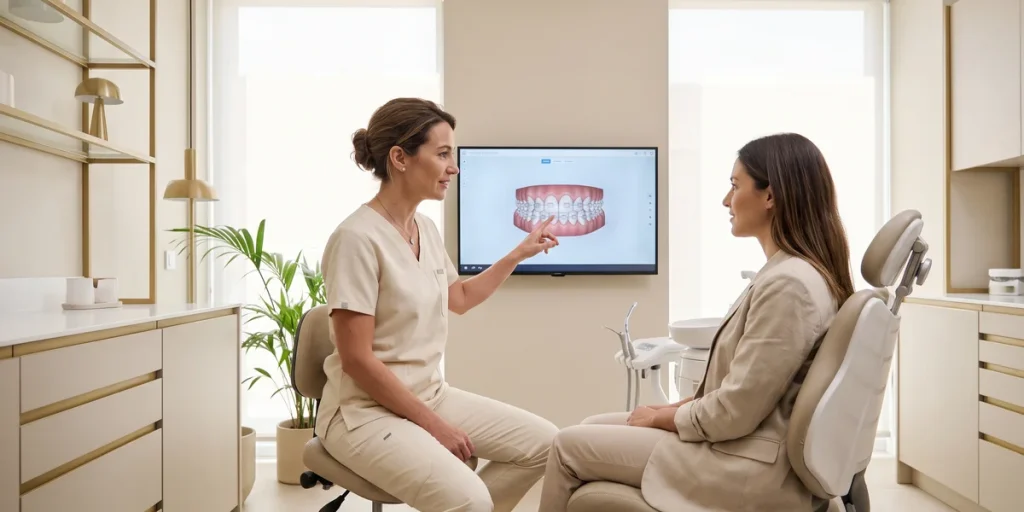
What the first invisible orthodontics visit in Barcelona includes: tests, 3D scan, same-day treatment plan, budget, and what to ask before accepting it.

Invisalign Comprehensive in Barcelona: what complex cases it corrects, when it's not enough, how long it lasts, what unlimited aligners mean, and what the price should include.
THE CLINIC IS CLOSED IN AUGUST.
You can schedule your first visit online now and secure your spot for a free full diagnosis in September.