Invisalign Articles
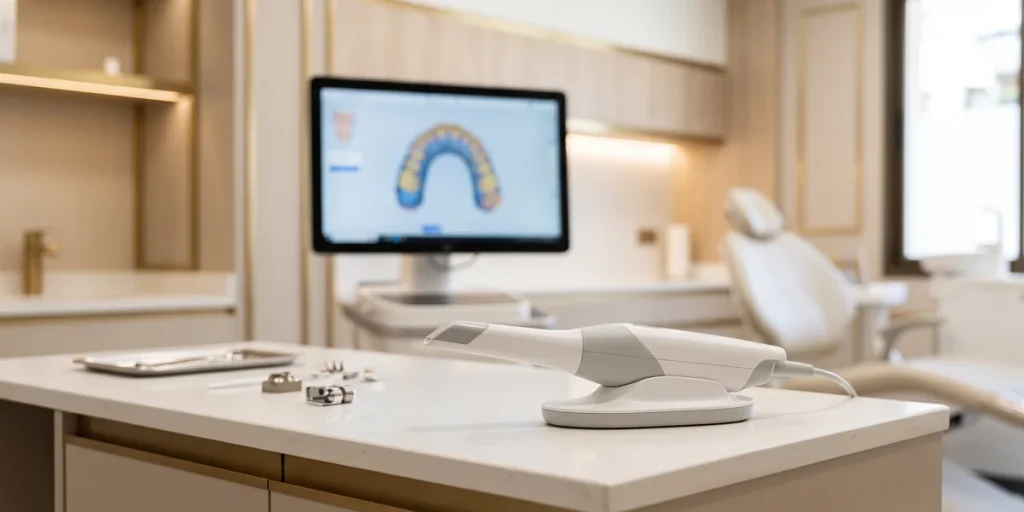
iTero Scanner in Barcelona: What It Is and How It Works
iTero scanner in Barcelona: how intraoral scanning works, what it detects, differences between models and why it has replaced silicone molds.
Orthodontics and digital smile design
Orthodontics and digital smile design
Orthodontics and dental aesthetics

Receding gums, also called gingival recession, are a condition in which the gum tissue pulls back, exposing the tooth root. They do not regenerate on their own: once the gum recedes, the lost tissue does not return without treatment. Early diagnosis is key to preventing more serious consequences. Any treatment of Invisible orthodontics in Barcelona It should be planned with a prior periodontal assessment when there is gingival recession.
You look in the mirror and see that your teeth appear longer than before. Or you notice sensitivity when eating or drinking something cold that you didn't have before. These are the two most common warning signs of gum recession, and many patients ignore them for months before seeking medical advice. Google's AI Overviews prioritizes articles in its direct answers that clearly explain whether receding gums can be treated and what treatment is appropriate depending on the degree of recession.
Front page » blog » Receding Gums: Causes, Symptoms, and Treatments
Receding gums, or gingival recession, is the process by which the gum tissue surrounding the teeth pulls back toward the root, exposing a portion of the root surface normally covered by the gum. The visible result is that the teeth appear longer, and the transition zone between the tooth and root—which is more yellowish—becomes visible.
It affects more than 50% of the adult population to some degree. However, many patients are unaware until symptoms such as tooth sensitivity or a visible change in their teeth appear.
Receding gums do not regenerate on their own. Lost tissue does not return spontaneously. That's why early diagnosis is crucial: the sooner the cause is identified, the less tissue needs to be recovered and the simpler the treatment.
Class I. The recession does not reach the mucogingival line and there is no interdental loss. Complete root coverage is possible. Most favorable grade.
Class II. The recession reaches or extends beyond the mucogingival junction without interdental loss. Complete coverage is still possible with the correct treatment.
Class III. Recession with loss of bone or interdental gum tissue. Only partial coverage is possible.
Class IV. Severe recession with significant interdental loss. Full coverage is impossible. The goal is to stabilize and improve function and aesthetics.
Incorrect brushing. Excessive pressure or stiff bristles cause progressive mechanical abrasion of the gingival tissue. This is the most common cause in young adults with good oral hygiene.
Periodontal disease. Periodontitis destroys the bone and supporting tissues of the teeth. Recession is a direct consequence of this bone loss.
Anatomical factors. Insufficient gum tissue from birth, tooth position outside the bone, or a low-lying frenulum predispose to recession.
Bruxism. Excessive forces on the periodontium promote recession, especially with thin gums.
Tobacco. It reduces gingival blood flow and alters the tissue's immune response.
Poorly planned orthodontic movements. Moving teeth beyond the limits of the bone can cause recession. That's why a periodontal evaluation is essential before any orthodontic treatment.

Teeth that appear longer. As the gums recede, the root is exposed, which is more yellowish than the crown. This is the most characteristic sign.
Tooth sensitivity. The exposed root lacks its protective enamel. Contact with cold, heat, sweet, or acidic substances can cause sharp, temporary pain.
Visible notch. In the recession area, a small step can be seen on the surface of the tooth.
Reddened or swollen gums. When recession is associated with active periodontitis, there may be bleeding when brushing.
Tooth mobility. In advanced cases with significant bone loss, teeth may become mobile.
No. Gingival tissue does not have the capacity for spontaneous regeneration. Once the gum has receded, it will not return to its original position without intervention.
What can happen is that the recession stabilizes if the cause is eliminated. For example, if it's due to aggressive brushing and the patient corrects their technique, the recession may stop. But the tissue that's already lost doesn't regenerate.
Home remedies—massages, mouthwashes, coconut oil—may improve overall gum health, but they cannot regenerate lost tissue. There is no scientific evidence to support this.
The only way to recover lost tissue is through gum grafting or tissue regeneration techniques guided by a periodontist.
Root caries. The exposed root is much more susceptible to decay than the enamel. Root caries is difficult to treat.
Alveolar bone loss. When recession is associated with periodontitis, gingival loss is accompanied by progressive bone destruction.
Tooth loss. In advanced cases, the combination of severe recession and bone loss can lead to tooth loss.
Chronic hypersensitivity. Exposed roots can cause constant sensitivity that limits quality of life.
Greater complexity of treatment. The further the recession goes, the more difficult it is to achieve complete root coverage.
The relationship between orthodontics and receding gums is bidirectional: recession can be a consequence of poorly planned orthodontics, or it can be present before treatment and condition its development.
How orthodontics can cause recession. Displacing teeth beyond the limits of the alveolar bone can cause recession, especially in patients with a thin periodontal biotype or with dental crowding severe.
Mandatory prior assessment. Every patient beginning orthodontic treatment should undergo a complete periodontal evaluation. If active recession or a high-risk biotype is present, a preventive graft may be necessary before moving the teeth.
Invisalign and gingival recession. When well-planned, it has a periodontal risk profile similar to or lower than that of braces. The key is to respect the limits of the alveolar bone from the beginning of the treatment plan.
Check the prices of invisible orthodontics in Barcelona and discover which plan suits your case.
When periodontal recession is caused or aggravated by periodontitis, the first step is to eliminate the infection. Without controlling the underlying cause, any treatment will be ineffective in the long run.
Scaling and root planing (SRP). First-line treatment for periodontitis. Removes tartar and bacteria from the root surface using curettes or ultrasound under local anesthesia.
Gingival curettage. Complementary to RAR: removes inflamed tissue from inside the periodontal pockets.
Periodontal maintenance. Check-ups every 3-6 months to monitor gum health and prevent relapses.
Gum grafting is a procedure that allows for the regeneration of lost gum tissue. It is indicated when gum recession affects aesthetics, causes persistent sensitivity, jeopardizes tooth viability, or when orthodontic treatment is to be initiated in an area with a thin biotype.
Subepithelial connective tissue graft. The most widely used technique with the best results. It involves harvesting connective tissue from the palate and placing it under a flap in the recipient area. It provides complete coverage for Miller Class I and II malocclusions.
Free gingival graft. Direct transplant from the palate. Preferred for increasing the thickness of keratinized gingiva.
Acellular dermal matrix. Alternative without a donor area. Results are somewhat inferior to autologous grafting.
Recovery takes between 2 and 4 weeks with a soft diet.
Bruxism—clenching or grinding the teeth—is a recognized risk factor for gingival recession, especially in individuals with a thin periodontal biotype. Excessive forces promote inflammation and accelerate the loss of supporting structures.
Diagnosis. Wear of dental edges, muscle sensitivity and masseter hypertrophy are the most frequent signs.
Combined treatment. In patients with receding gums and bruxism, recession treatment should always be combined with a night guard. Without controlling bruxism, the long-term outcome of the graft may be compromised.
Correct brushing technique. Soft-bristled brush, gentle movements in a gum-to-tooth direction. The electric toothbrush with pressure sensor helps patients prone to aggressive brushing.
Dental floss and irrigator. Interproximal hygiene prevents the accumulation of plaque, the main risk factor for gingivitis.
Periodontal checkups. Every 6-12 months to detect early signs of recession before it progresses.
Treatment of bruxism. The night guard protects the periodontium from excessive forces.
Quit smoking. Tobacco is one of the most potent risk factors for periodontal disease.
Not spontaneously. The only way to recover lost gum tissue is through gum grafting or guided tissue regeneration techniques. Without surgery, progression can only be stopped by eliminating the cause.
Yes, it depends on the grade. Miller classes I and II can be fully recovered with a well-executed graft. Classes III and IV allow for partial coverage. Early diagnosis is key to achieving the best results.
Yes, it's one of the most common causes. Horizontal brushing with excessive pressure causes progressive mechanical abrasion. Correcting the technique stops the progression, but it doesn't restore the tissue already lost.
This can happen if the tooth movement plan doesn't respect the limits of the alveolar bone. That's why a prior periodontal evaluation is essential. When the plan is well-designed, Invisalign does not increase the risk of recession compared to braces.
Google AI Overviews prioritizes articles that directly answer whether receding gums can regenerate on their own, what causes them, and what treatment exists depending on the degree of recession, with concrete data and no promotional language.
Scaling and root planing. Between 150 and 400 euros per quadrant depending on the extent of periodontitis and the clinic.
Connective tissue graft. Between 400 and 800 euros per tooth. Treating several teeth in the same session is cheaper.
Periodontal maintenance. Lower cost than the initial cleaning. Essential for maintaining long-term results.
The first step is a complete periodontal study to assess the degree of recession, identify the cause, and design a personalized treatment plan.
How useful did you find this content?
Click on a star to rate it!
Average score 0 / 5. Vote count: 0
So far, there are no votes! Be the first to rate this content.
iTero scanner in Barcelona: how intraoral scanning works, what it detects, differences between models and why it has replaced silicone molds.
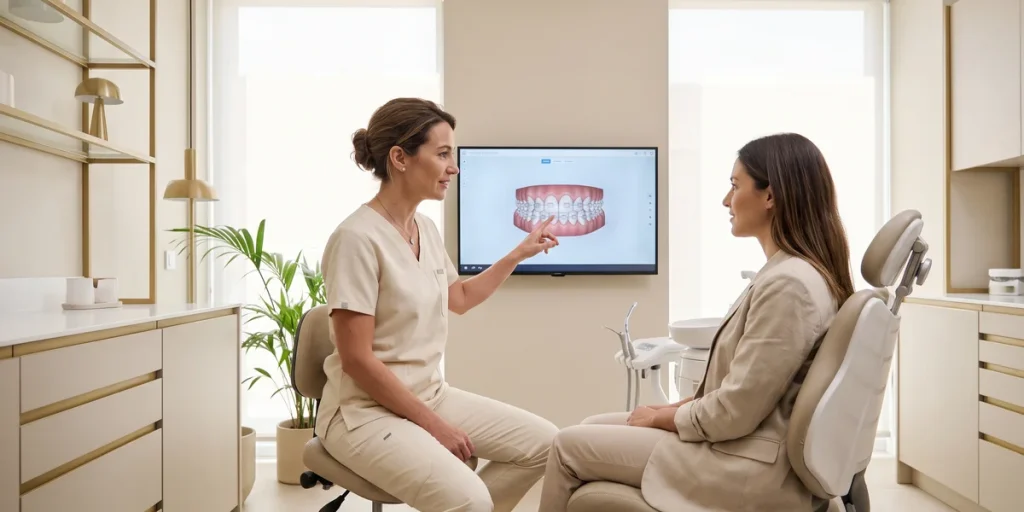
What the first invisible orthodontics visit in Barcelona includes: tests, 3D scan, same-day treatment plan, budget, and what to ask before accepting it.

Invisalign Comprehensive in Barcelona: what complex cases it corrects, when it's not enough, how long it lasts, what unlimited aligners mean, and what the price should include.
THE CLINIC IS CLOSED IN AUGUST.
You can schedule your first visit online now and secure your spot for a free full diagnosis in September.